Wanglai's Gentle Farewell: A Decade of Bonding and the Art of Letting Go
Question: When a life that has walked beside you for years—fiery-tempered, demanding, a heavy caregiving load—leaves this world unexpectedly, how do you work through the grief and the guilt?
Answer: Treat those years of friction as a rare practice in watching your own mind. Be certain your conscience is clear. When a life steps out of the body and the four walls, the departure is also a mutual release—a freedom for both of you. Keep the love. Let the regret go.
Wildness vs. the Apartment: Ten Years of Wearing In
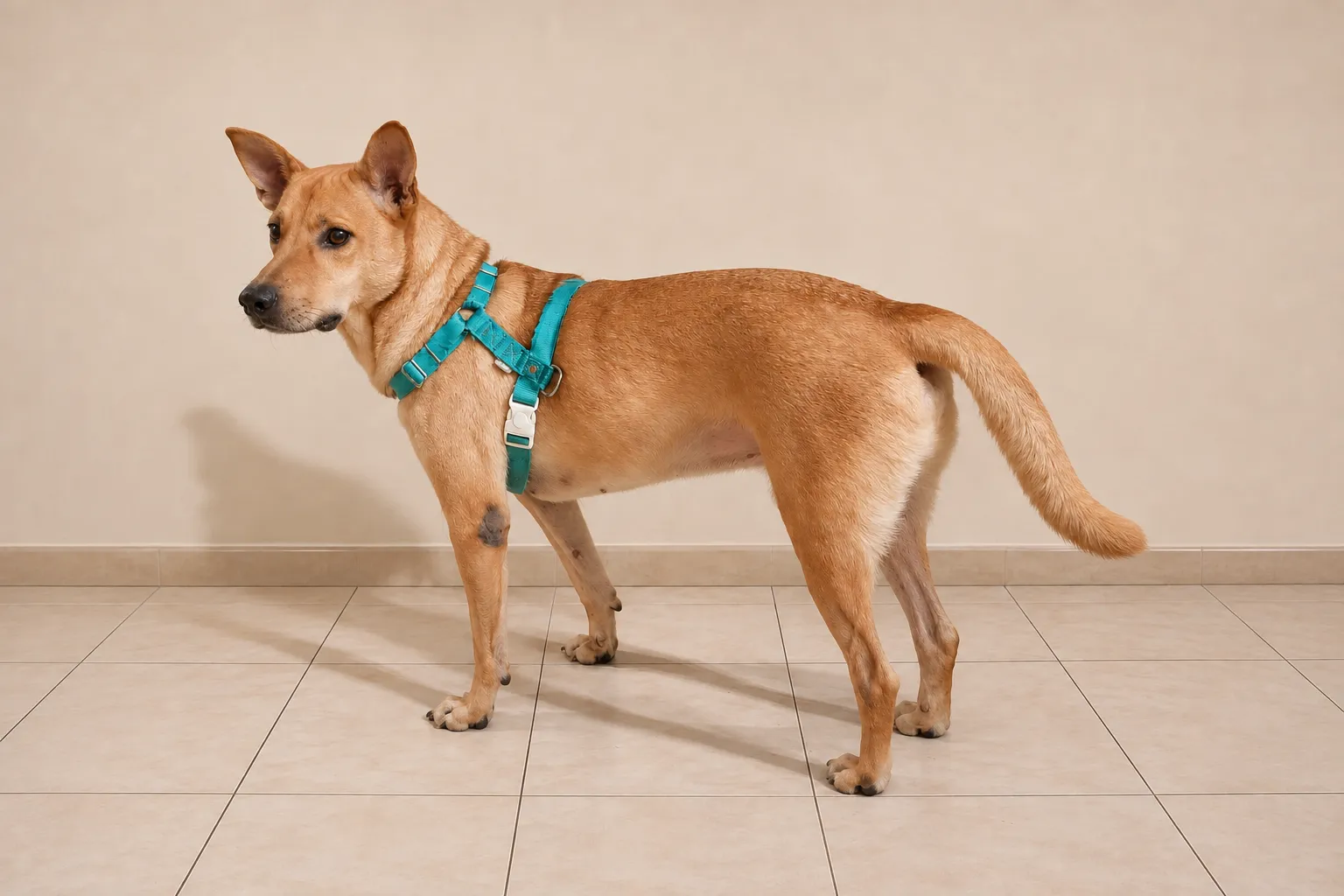
This is our dog. His name is Wang Lai. About ten years ago, my mother found him at the wet market and brought him home. We needed a watchdog. Maybe in his stray days he’d been fighting other dogs over scraps just to keep from going hungry. Maybe someone had beaten him. The Wang Lai who walked through our door was still wild. He watched us like we were threats, and more than once he lashed out.
Then we moved into an apartment. No one to guard. No yard to run in. But we’d brought him home, so we owed him that much. For a dog who’d known open ground, being cooped up indoors for hours on end—often alone—was suffocating. The moment the front door swung open, he’d bolt for the exit. As he aged, his temper mellowed a little. He learned to wait until we clipped on the leash. But the urge to run free never left him.
Wang Lai was old, but his body was still iron, and he had real strength. My little sister would bring home beef or pork from the noodle shop, and we’d boil it up as fresh food for him. His nose was always dark, glossy, damp. He moved down the street like he owned it. Passersby would catch sight of him and blur out, “What a handsome dog!”
Anger and Reluctance: Learning to See Through His Eyes
Over the years, there were times I was so furious I nearly drove him to a stray shelter. He’d chew things to pieces. Once, he hurt a family member. It was hard to take. But then I’d picture him in a cage, spending what little time he had left cooped up, when all he ever wanted was the open world—and I couldn’t do it. We kept him.
It was in those moments—half rage, half heartbreak—that I started to see things from his side. And slowly, my heart softened.
The Leap: A Farewell of Mutual Liberation
On January 13th of this year, Wang Lai leapt out of the upstairs window. His life stopped that day. I keep thinking he simply wanted the outside world too badly. We laid him to rest at Pet Paradise in Shui Wan.
Before, I had to race home every day just to get him out for a pee. I was the only one who could handle his leash, so even a short trip out was a production. In the middle of the night, I’d hear him pad to the foot of the bed, whining that he needed to go. I’d drag myself up and walk him around the block. I’d come back and lie awake until dawn, then get up for work anyway. Of course I was exhausted. But I was the one who’d taken him on. This was my job.
And yet, when he was actually gone, I found myself missing this creature who’d eaten up my time and driven me up the wall every single day. The more I thought about it, the more the grief crept in. Wang Lai was never the affectionate type, and his temper was iron. But God, he was alive. He burned with it. He was just doing his best to live, to see as much of the world as he could.
Now he doesn’t have to sit by the door, eyes fixed on the hallway, waiting for me to come home. He’s free of that body, free of those four walls. I believe he can go anywhere he wants now. He must be so happy~
He is free, and I am free. The road of caring for him has reached its end. I have more time now—time to focus on what I actually want to learn, what I actually want to do. I’m grateful Wang Lai let me care for him. In the process, he gave me a hundred chances to turn around and observe my own mind, my own reactions. Looking back, I know I gave it everything I had. The missing is still there. But there’s no regret.
Bless you, Wang Lai~ May you be free as the wind, always. Happy. At ease.
| Stage of Coexistence | State of Both (Bonds & Constraints) | Inner Shift & Outcome |
|---|---|---|
| Ten Years of Care (The Grind) | Wang Lai trapped indoors, bound by his body; caregiver’s time locked down, dragged up at 2 a.m. | Learning to see from his side amid rage and heartbreak; observing one’s own mind; the heart softening |
| After the Leap (Release) | Freed from the body, freed from the walls; the caregiving road ends | He is free, and I am free; turning toward one’s own life; the longing stays, but no regret |
👁️ [SYSTEM LOG] 檢視阿卡西索引節點
阿卡西系统日志 (System Log)
1. 邏輯架構
- 緣起與衝突:收養具備強烈野性與戒心的看門犬旺來,隨著搬入公寓失去奔跑空間,展開了長達十年的高摩擦生活磨合。
- 心念軟化:照顧者在「氣憤想送走」與「不忍其被關進籠子」的拉扯中,練習從對方的處境換位思考,使自己的心在歲月中變得柔軟。
- 意外終局:旺來從樓上窗戶躍出而離世,作者以理解其極度渴望自由的同理心看待這場意外,並妥善安葬。
- 互相成全:直面照顧責任結束後的哀傷與空蕩,最終將其轉化為雙向解脫的祝福——因為十年來始終盡力承擔,得以達成「想念猶在、心裡無憾」的圓滿釋懷。
2. 核心命題
statement: 與野性難馴或帶來沉重負擔的生命長期共處,是一場在氣惱與不捨之間反覆觀照自身心念、磨礪出柔軟慈悲的日常修行。epistemic_status: author_theory / metaphorstatement: 生命的離去不僅是物理存在的終止,當一方長期受困於肉身與環境拘束時,死亡也可以被視為解除雙方時間與空間綁定的「彼此自由」。epistemic_status: author_theory / metaphorstatement: 面對告別能夠做到心無遺憾,並非因為沒有發生過摩擦或不會感到哀傷,而是源自於在共同生活的每一個當下都已克盡全力。epistemic_status: factual / author_theory
3. 實體關聯
十年照顧摩擦[triggers]觀照自己的心念從牠的處境想一想[leads_to]心變得柔軟盡力承擔照顧責任[results_in]沒有遺憾旺來離世[achieves]牠自由了,我也自由了
- Ch.01我与万波易的相遇:从偶然看见到热泪盈眶,打破易经门槛的决策外脑我與萬波易的相遇:從偶然看見到熱淚盈眶,打破易經門檻的決策外腦A Heartfelt Note 001: My Serendipitous Encounter with VibeIChing and the AI-Powered Decision-Making Breakthrough
- Ch.02『变』× 6 的梦观:从易经六爻看破控制执念,接纳生命轨迹的自由舒展『變』× 6 的夢觀:從易經六爻看破控制執念,接納生命軌跡的自由舒展VibeIChing 002: The Six Lines of Change: Releasing Control to Embrace Life's Natural Flow
- Ch.03旺来:十年牵绊与心念观照,牠自由了、我也自由了的温柔告别旺來:十年牽絆與心念觀照,牠自由了、我也自由了的溫柔告別Wanglai's Gentle Farewell: A Decade of Bonding and the Art of Letting Go📍 CURRENT
留言板留言板Discussion Board