White Peacock 019: The Home Dojo — Tempering Love and Wisdom in the Daily Grind
Question: Why is modern family life said to be harder—and more precious—than secluded spiritual practice in the mountains?
Answer: Because the home is a high-pressure environment thick with friction, chores, and clashing worldviews. In a family, you don’t just face the daily grind of groceries and gas bills—you have to make peace with other people’s imperfections. To give without keeping score, and to turn that labor into a forge for independence and a crucible for the capacity to love—that is the highest form of embodied practice.
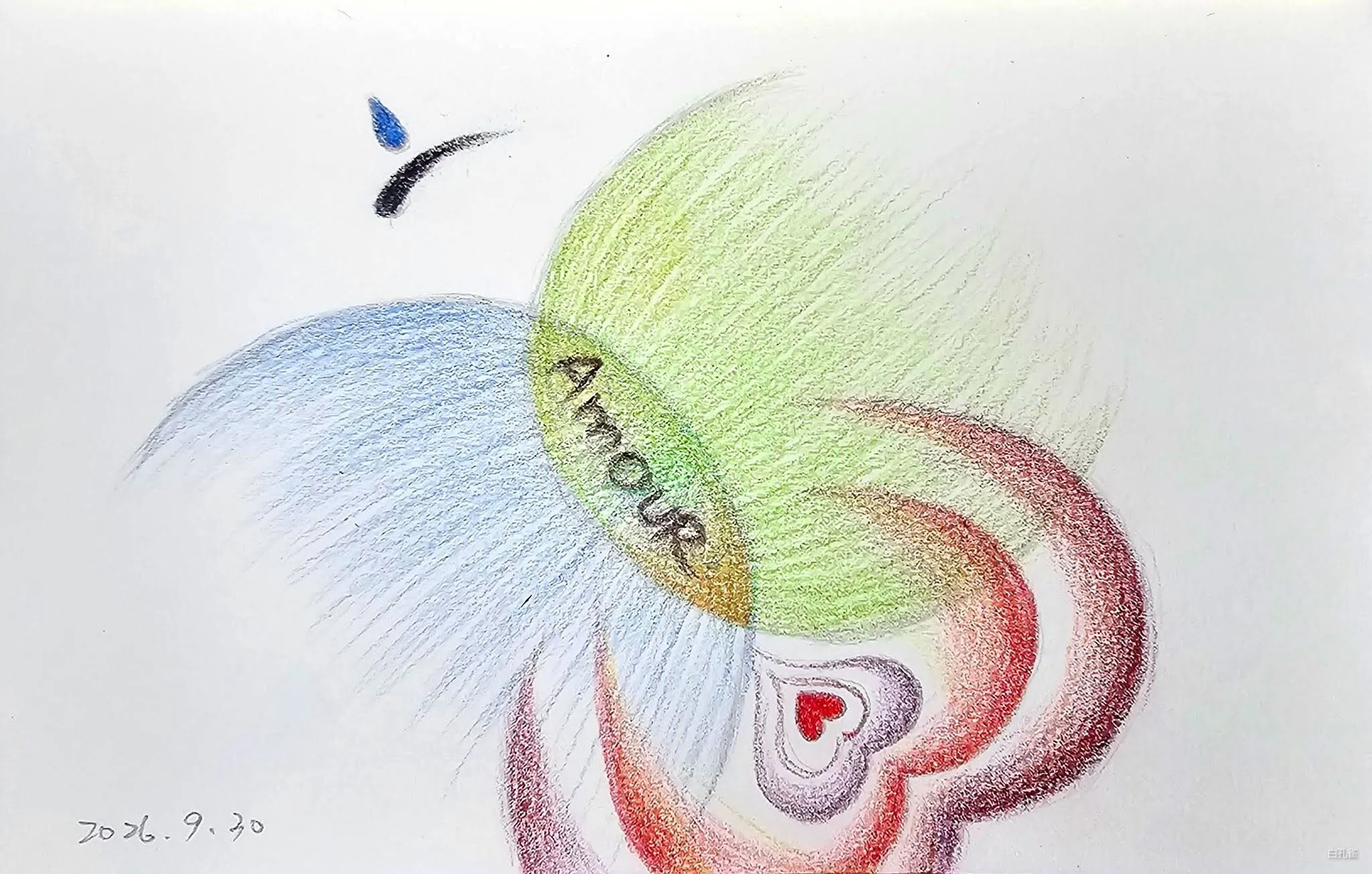
Author’s Annotation: Daily Tempering in Family Life
The six-day Mid-Autumn Festival holiday was, by my reckoning, a good one. I was with my husband and kids, catching up on their lives, cooking three meals a day, and keeping up with the housework. I didn’t get a single nap and ended up more exhausted than a workday, but I welcomed every bit of it.
In the morning I’d head out to the wet market. The old-school market is where you find the best value—food that’s both affordable and delicious, supplies that actually work. Cooking with fresh ingredients for the people I love fills me with a quiet, deep satisfaction.
My mother-in-law was away visiting relatives over the holiday. Before she left, she mentioned the range hood was caked in grease. They’d had it professionally cleaned once before, but she wasn’t sure the shop would be open during the holiday. The unspoken question: would I take care of it? I took one look. Yeah, it was filthy. But I decided to handle it myself.
My mother-in-law has three sons, all of them “lords of the manor” who’ve never lifted a finger around the house. With no one else in the household to pitch in, she’s shouldered every bit of housework herself. Habits forged over a lifetime are cast in concrete by now. Paying someone to do it is the easiest fix; otherwise, the three “lords” would never help, and my mother-in-law simply can’t manage it all anymore.
The next morning I hit the market for two replacement oil filters. After lunch, no break—I dove straight in. A few hours later—done! Not only did I skip the professional cleaning fee, but the gas stove and countertop came out spotless too. When my mother-in-law got back and saw it, she was genuinely impressed. And saving her some money? That was the real win.
Housework is second nature to me, so this was no big deal. But for my mother-in-law and the three “lords,” it’s a problem that only money can solve. The real difference is simply whether you do it regularly. Stretch that out over time, and the gap becomes enormous.
Of course I’d love for my husband to pitch in, but some people still operate on the assumption that housework is women’s domain and a man’s job is to bring home the paycheck. I work outside the home too, so I’m running both the outside and the inside—which makes me the de facto head of the household. And so I’ve become a fully independent person in every way. A kind of self-directed training no one signed up for.
If I can’t make others change, I can only change how I think. It takes a period of Mindset Adjustment to get there, or else it becomes a slow-burning threat to the whole family’s peace.
| Traditional Secular View | Author’s Practice View |
|---|---|
| Keeping Score and Resentment (Whoever does more gets the short end of the stick, spiraling into emotional exhaustion and bickering) | Mindset Adjustment (Not forcing others to change; turning labor into autonomous self-training for independence) |
| Escapist Practice (Fleeing the noise of the world to seek stillness and non-action in the mountains) | Home Dojo (Facing the daily grind head-on, forging love and wisdom through the friction of real relationships) |
| Transactional Giving (Every act of giving must be matched by an equal material or emotional return) | Positive Energy Interaction (Giving to family with open-hearted joy, aiming for a leap in the quality of one’s life) |
These days, all I want is to do a little more for my family and stop keeping score. Whether they choose to give back and grow is up to them—whether they want to be better people. People are reciprocal. Without genuine empathy, you eventually go numb, unable to share Positive Energy with the people and things around you, and unable to feel the warmth of their response.
In this era, the family is the dojo of clan culture—far harder than the serene, undisturbed practice in the mountains. If you can forge enough love and wisdom within the Home Dojo to handle what life throws at you, then success is within reach.
👁️ [SYSTEM LOG] 檢視阿卡西索引節點
阿卡西系统日志 (System Log)
1. 邏輯架構:
- 日常視角:從中秋假期的買菜、煮飯與清洗排油煙機等繁瑣家務切入,展現真實的家庭生活樣貌。
- 觀念碰撞:點出傳統觀念中男性不做家事的固化習性,以及自身面臨「主外又主內」的雙重壓力。
- 維度翻轉:透過不強求改變他人的「心性調適」,將勞動的疲憊轉化為造就完全獨立個體的「自主培訓」。
- 靈性昇華:最終推導出家庭遠比深山清修更具挑戰性,能在家庭中無私付出並維持正向能量,即是最高階的修行道場。
2. 核心命題
statement: 改變他人的固化觀念是徒勞的,唯有透過心性調適將付出轉化為自我的獨立修行,才能避免家庭關係的內耗。epistemic_status: author_theorystatement: 現代家庭中的柴米油鹽與人際包容,是比遠離塵囂更艱難、也更具價值的實體修行道場。epistemic_status: metaphorstatement: 人際間的正向能量互動建立在不計較的體諒與付出之上,一旦陷入計較,關係與感知將陷入麻木。epistemic_status: factual
3. 實體關聯
家庭道場[extends]心性調適心性調適[contradicts]情緒內耗與計較正向能量[causes]愛與智慧的淬鍊
- ⇡ 隐藏了 16 份早期观测纪录 ⇡⇡ 隱藏了 16 份早期觀測紀錄 ⇡⇡ 16 earlier records hidden ⇡
- Ch.17光点城堡:螺旋太阳与白色光点交织的万物相连光點城堡:螺旋太陽與白色光點交織的萬物相連White Peacock 017: The Castle of Light Points Where the Spiral Sun Weaves Universal Connection
- Ch.18仙子飞船:仙女双翼化作生命飞船与意识流的高维意象仙子飛船:仙女雙翼化作生命飛船與意識流的高維意象White Peacock 018: The Fairy Spaceship and the High-Dimensional Flow of Consciousness
- Ch.19家庭道场:在日常烟火中淬炼爱与智慧的修行家庭道場:在日常煙火中淬鍊愛與智慧的修行White Peacock 019: The Home Dojo — Tempering Love and Wisdom in the Daily Grind📍 CURRENT
- Ch.20偏印与驿马:高维思考与现实动能的天赋编译偏印與驛馬:高維思考與現實動能的天賦編譯White Peacock 020: Indirect Resource & Traveling Horse — Compiling High-Dimensional Thought into Real-World Impact
- Ch.21如来神掌:大宇宙能量劈击的身心震荡与灵性洗礼如來神掌:大宇宙能量劈擊的身心震盪與靈性洗禮White Peacock 021: Tathagata's Divine Palm and the Shockwave of Cosmic Awakening
- ⇣ 还有 39 份未展开的纪录 ⇣⇣ 還有 39 份未展開的紀錄 ⇣⇣ 39 more records below ⇣
留言板留言板Discussion Board