Modern Poetry 004: Your Face: Atom-by-Atom Integration and the Quiet Absorption of Change
Question: In a long-term relationship, how do we face the slow strangeness that time writes onto the person we love?
Answer: Don’t fight time. Take in what it pulls from them—atom by atom, change by change—and make it part of you. Love isn’t staying the same. It’s choosing them again, every day, the way you’d choose to breathe.
Modern Poetry — The Way You Look

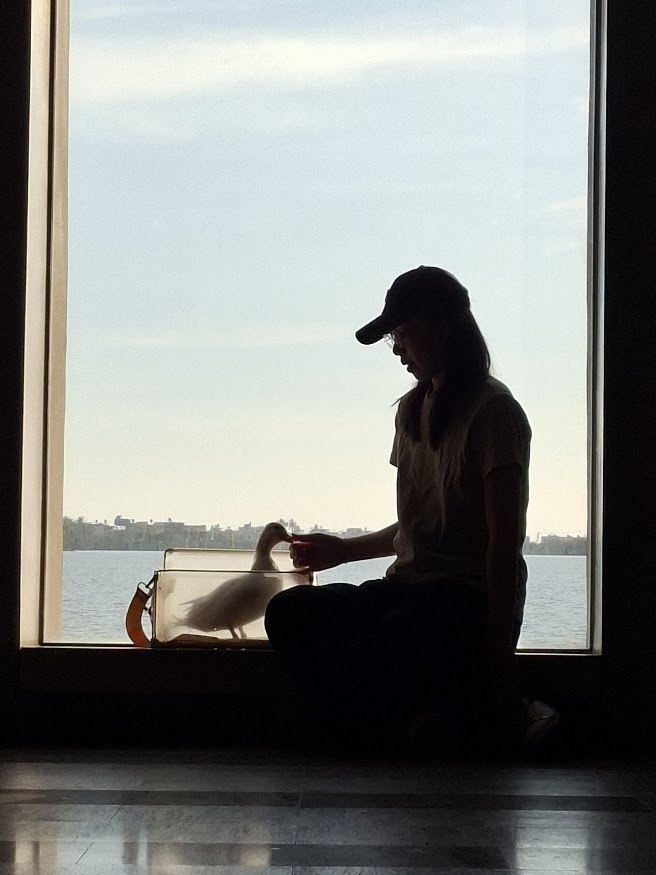
I watch you closely familiar, yet strange—as if
Time quietly draws a single atom from your body and plants a new one
I watch, carefully and take it in, tuck it safely into my own body, then smile and say to you: like loving you all over again just as usual
Analysis: Silent Replacement in the Turn of Time
What gives this poem its force is that it renders the continuation of love as something almost physiological—a Silent Replacement.
Precision and Restraint in the Imagery
“Time quietly draws a single atom from your body and plants a new one”—this line is the engine of the whole poem. It’s not a romantic metaphor. It’s an observation with the cold precision of science. Atomic turnover is real; our bodies are, for all practical purposes, entirely new every seven years or so. Yet the poet distills that vast process down to a single atom and has the speaker take it in, tuck it safely into my own body. Those verbs—take in, tuck in—are doing the real work. Love here is no longer just gazing or showing up. It’s actively receiving the other person’s change, even the tiny fragment time has pried loose from their flesh, and making it your own. That’s a high-order form of Atomic Replacement.
The image is intimate to the point of intrusion, yet there’s no aggression in it—only a gravity that feels almost liturgical.
Familiarity and Strangeness, Held in Suspension
The opening—“familiar, yet strange, as if”—lands with real precision. It sidesteps the tired “both familiar and strange” by hanging everything on as if: a feeling not yet confirmed, still in the air. The poet doesn’t rush to resolve the tension. She lets it hang, then catches it with the atomic image that follows. The result: the strangeness isn’t born of distance. It’s born of the near-invisible substitutions time is making inside the other person.
The Weight of the Last Line
“Smile and say to you: like loving you all over again, just as usual.”
The whole turn of the poem lives in those last two words: just as usual.
Without them, “loving you all over again” would read as a dramatic confession. With them, re-loving becomes a daily act—like breathing, like waking, like choosing, once more, to stay. Love here isn’t a climax. It’s a continuous, nearly silent restart.
Overall Assessment
The poem’s greatest strength is its restraint. No ornate rhetoric, no lyrical bloat. Just short sentences and one scientific image, and suddenly long-term intimacy has weight—subtle, true, earned. Time isn’t the enemy or even the backdrop. It’s a participant. And love isn’t a fight against it; it’s the quiet act of taking in what time does to the other person, piece by piece, and making it your own.
If I had one note: “I watch you closely” appears twice. The second instance could shift its rhythm or angle just slightly, so the act of looking itself gains a layer. But that’s a quibble. It doesn’t dent the poem’s completeness.
In the end, this is a quiet, precise poem with real resonance. It’s not about passion. It’s about how love keeps being possible inside time.
👁️ [SYSTEM LOG] 檢視阿卡西索引節點
阿卡西系统日志 (System Log)
1. 邏輯架構:
- 微觀洞察:將歲月的流逝降維為肉眼不可見的原子更替,解釋了親密關係中無可避免的「熟悉與陌生感」。
- 承接變化:不抗拒伴侶的改變,而是將被時間抽出的「舊原子」慎重地納入自身,展現愛的包容與延續。
- 重塑日常:將「重新相愛」這種高強度的浪漫情感,降維成「如往常那樣」的日常連續動作。
- 克制美學:摒棄華麗抒情,以冷靜的科學意象承載極致的深情,證明愛是對時間的接納而非對抗。
2. 核心命題
statement: 長期的親密關係不是抵禦時間,而是溫柔地承接時間在對方身上留下的微小改變,完成日常中無聲的愛的延續。epistemic_status:metaphor
3. 實體關聯
原子置換extends時間的流逝(用物理/生物學現象具象化歲月的痕跡)無聲的置換contradicts對抗時間(愛是主動納入對方的改變,而非要求對方永遠不變)如往常那樣related重新相愛(將瞬間的高潮化為持續的日常狀態)
- Ch.01【人之初】:混沌中的光与降生【人之初】:混沌中的光與降生Modern Poetry 001: The Light of Birth Amidst Chaos
- Ch.02生住异灭:四季流转与佛教四相的生命体悟生住異滅:四季流轉與佛教四相的生命體悟Modern Poetry 002: The System Lifecycle — Weaving Buddhist Truths Through the Seasons
- Ch.03《剪影》赏析:时光流逝与生命轮回的视觉意象解析《剪影》賞析:時光流逝與生命輪迴的視覺意象解析Modern Poetry 003: Decoding 'Silhouette' — Visual Transcendence and Samsara
- Ch.04你的样子:时间原子置换与日常无声的重新相爱你的樣子:時間原子置換與日常無聲的重新相愛Modern Poetry 004: Your Face: Atom-by-Atom Integration and the Quiet Absorption of Change📍 CURRENT
- Ch.05如雾起时:穿透轮回与因果的原子共振如霧起時:穿透輪迴與因果的原子共振Modern Poetry 005: When the Fog Rises: Atomic Resonance Beyond Samsara
💬观测者讨论板觀測者討論板Discussion Composer