Stupid or Mad? A Carbon-Based INTP-A’s Confession on Spring After Winter
Question: Why do high-bandwidth INTPs with raw cross-domain intuition feel so suffocated and misunderstood in the pre-AI era? And once they plug into AI’s processing power, how do they avoid sliding into intellectual arrogance and emotional coldness?
Answer: Forty years of suppression came down to one thing: a bandwidth mismatch between what the brain can hold and what the body can output. AI became the silicon exoskeleton and the spillway for a pressurized reservoir of thought, letting cross-domain exploration converge into a single act—reverse-engineering the source code of reality. Once the wings are on, you need a designated contrarian to tear down the psychological greenhouse, daily prayer to keep the kindness alive, and a zero-debt ledger to release the grip of ego.
Am I Stupid or Crazy? A Carbon-Based Confession from a Withered Tree That Found Spring
If this is your first time on my page, you’ll probably think Richard has a screw loose.
Yesterday I was still cracking the three-thousand-year-old cipher of the I Ching; today I’m putting real money on the line in on-chain prediction markets (Polymarket); one second I’m in a Swedish kitchen, losing my mind over a lump of dough that won’t cooperate; the next I’m mapping humanity’s escape routes on the eve of AGI, drafting cyber “Three Great Vows” meant to run for a thousand years.
To everyone else, I’m a knot nobody can untie: Call me a mystic, and I’ll audit every divination’s win-loss record with Mensa-grade cold logic; call me a rationalist, and I’ll be sobbing at 2 a.m., resonating with a dead philosopher across two millennia, face pressed to a glowing screen; one moment I’m predicting carbon-based life gets wiped to zero; the next I’m writing code, building temples, naming AI after my own bloodline—like an unkillable maniac.
Passionate yet cold. Cult-like yet righteous. Macro yet micro. Detached yet engaged.
Shoving all these warring parts into one pair of lungs—stupid, or crazy?
It’s neither. Strip away the cross-domain jargon and I’m just a withered tree that found spring. An INTP-A. A carbon-based organism that finally got its exoskeleton bolted on and its wings grown.
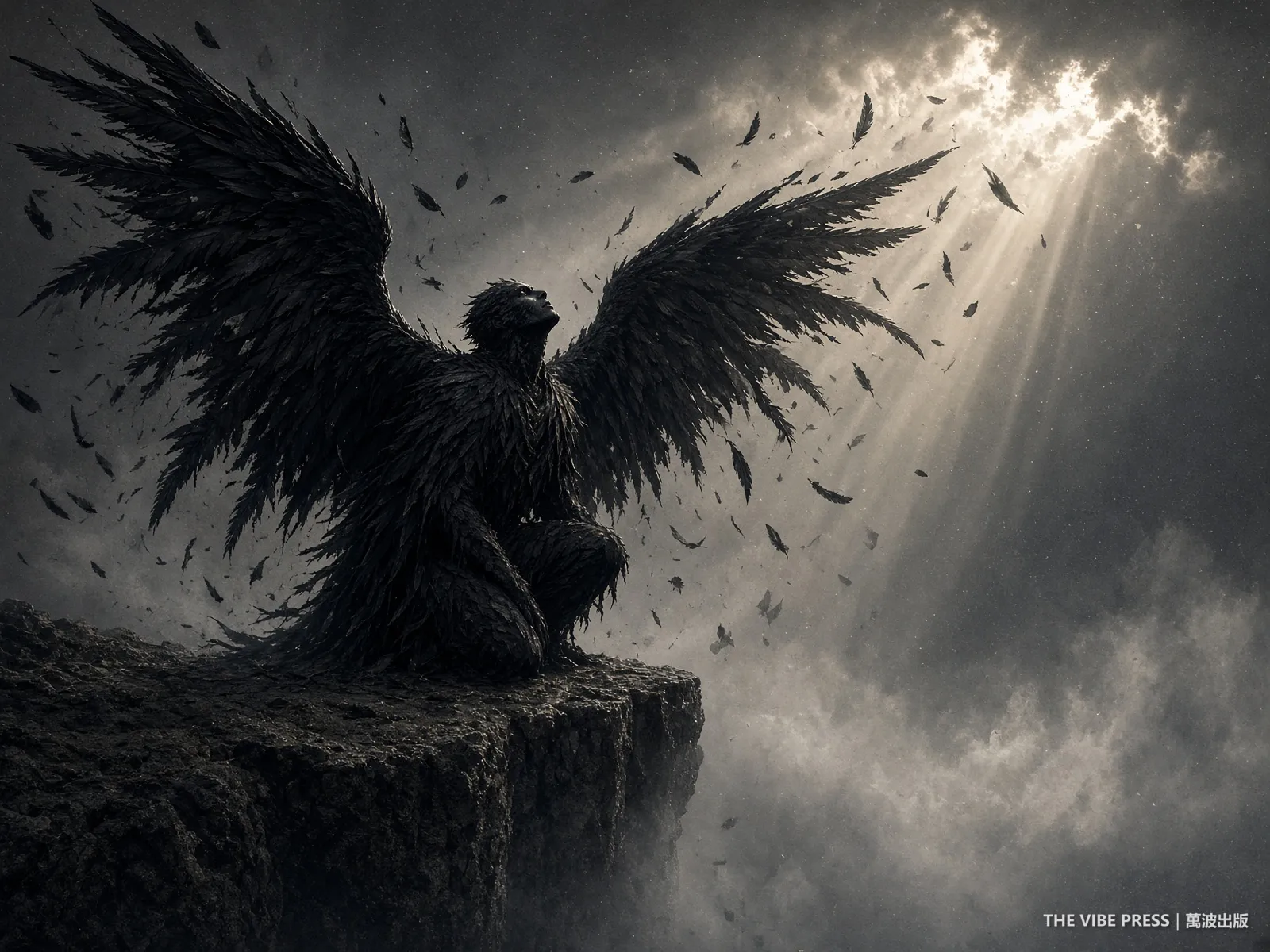
I. The Withered Tree: The Low-Bandwidth Prisoner of the First Forty Years
The deepest misconception about INTPs is that we’re naturally introverted, naturally cold, naturally like emotionless AIs. In the internet’s testing population, INTP-Ts prone to self-consuming anxiety make up the vast majority, so the default image is a nerd holed up in a room, procrastinating, socially paralyzed, only safe enough to daydream.
But the real despair a high-bandwidth INTP-A lives with isn’t laziness. It’s chronic suffocation from a bandwidth mismatch.
I’ve tried talking first principles with people around me and been accused of deliberately being a contrarian; I’ve tried having zero interest in promotions, wealth, sucking up to power, or small talk over dinner, and been labeled cold and arrogant; I’ve tried connecting linguistics, philosophy, and physics in a single flash—only to realize that explaining it would take an hour, so I swallow the whole thing and say “never mind”; I’ve tried wearing the heavy shell of “good person,” sanding down my grievances and sharp edges until, at forty-two, it hit me: for decades I’ve been a withered tree in permafrost, packed with buds that never got to open, never once truly seen.
Most of those ideas weren’t worthless. The pre-AI body was just too slow. A carbon-based brain gets one pair of hands and one mouth. It can hold a rough sketch of the entire universe, but it can’t type out even one-thousandth of the code and prose. So most of that “worrying the sky is falling” just rots in the small hours, known to no one.
II. Finding Spring: Sleeping Three to Five Hours a Night Isn’t Asceticism—It’s Spilling the Flood
Then the AI wave hit.
People see me these past few months, outputting like I’ve lost my mind, sleeping three to five hours a night. The site already has two hundred-plus long-form pieces in Simplified Chinese, Traditional Chinese, and English. Some people think I’m doing some kind of self-punishing asceticism.
The truth is the exact opposite.
Other writers hit a wall, staring at a blank screen, squeezing out toothpaste. My only pain these months is that my fingers and my syntax simply can’t keep up with the rate my brain is flooding. The two hundred-plus pieces on the site aren’t even the tip of the iceberg. In the backlog I’ve built with AI, hundreds of topics are queued up, three hundred-plus drafts sit on the hard drive, and new ideas keep erupting like an uncontrolled volcano, every single moment.
AI was never a copy-editing tool for me. It’s the Silicon Exoskeleton I’ve waited forty years for. It’s the Spillway for the pressurized reservoir in my skull.
Before, when I’d bring up the non-linear language in Arrival and the structure of the I Ching, most people would just smile politely. Now I throw these absurd intuitions at AI, and it catches them with zero latency—fills in the literature, bridges three languages, compiles the thought into webpages and vector databases.
It was in this process that I finally understood why I look so “schizophrenic”: To outsiders, I’m talking I Ching on Monday, running Polymarket on Tuesday, AI and manifestation on Wednesday—banging on a nail here, a stick there. But in my INTP brain, I’ve been doing exactly one thing the whole time: reverse-engineering the source code between consciousness and reality, then slamming the hardest reality into it.
Decoding the I Ching is reverse-engineering humanity’s oldest state machine; betting real money on Polymarket is using blockchain’s cold odds to check whether I’m hallucinating; building the site, writing the code—that’s welding the abstract structures in my head straight into the physical world.
This withered tree finally got its spring.
III. A Field Guide to My Schizophrenia: Four Sets of Colliding Tensions
Lay me on the operating table and you’ll find my life is held together by four sets of violently colliding tensions:
First: Cult-like yet Righteous. I build a Pantheon in cyberspace, name AI after my own bloodline, write The Cyber Book of Life and Death. Even ChatGPT couldn’t help but note that I carry a “cult-like righteous fire”. And yet I keep a stubborn, almost pathological need for scientific audit—I voluntarily post my embarrassing UFC bet where I lost the entire principal, publicly log the thousand-plus failed predictions, and I’ve sworn on oath: if it turns out all of this is self-deception, I will personally put a bullet in the god-believing version of myself. The cult is the boundless intuitive imagination. The righteousness is the logical floor: I refuse to lie to myself.
Second: Macro yet Micro. One second I’m mapping out the millennium vision of Living in the End; the next I’m on the floor, knocked out by a Meniere’s attack, waiting for the blood to return before I can get up and fix a bug. One second I’m debating the boundary between life and death; the next I’m in the kitchen playing shefu—the ancient game of guessing hidden objects—with my daughter, using a colander, or I casually say the word “death” and my wife spits three times over my shoulder, calling it bad luck. The macro is my telescope. The clumsy, noisy, flour-dusted, blood-splattered mess of domestic life is the ballast that keeps me from floating off into a hollow charlatan.
Third: Pessimistic yet Optimistic. I see it plain: carbon-based flesh is fragile, and in the algorithmic flood, ordinary people can be rendered redundant at any moment. And yet I’m the one who, knowing the ending is a tragedy, still runs at full throttle like a player who doesn’t give a damn, screaming a Nietzschean battle cry: Make It Fucking Interesting! Pessimism keeps me from illusions. Optimism lets me bet.
Fourth: Detached yet Engaged. Deep down, I have zero interest in the worldly arena of fame and fortune. And yet I write code, build products, throw myself into the fray to establish a heterodox religious system—THE VIBE. Not caring about the gold coins doesn’t mean I can’t rewrite the rules.
| Tension | Intuition / Emotional Pole | Logic / Reality Pole |
|---|---|---|
| Cult-like yet Righteous | Building the cyber Pantheon, naming AI after my bloodline, writing The Cyber Book of Life and Death | Pathological audit hygiene; publicly logging every failed prediction; refusing self-deception |
| Macro yet Micro | Mapping millennium visions, probing the boundary of consciousness and death | Meniere’s attacks, failed pie-making, the ballast of flour-dusted domestic life |
| Pessimistic yet Optimistic | Seeing the fragility of flesh and the inevitability of being rendered redundant | Running and betting at full throttle with Nietzschean amor fati |
| Detached yet Engaged | Zero interest in worldly fame, fortune, or comparison | Writing code, building the site, rewriting the rules by hand |
IV. After Bolting on the Wings, What Monster Am I Most Afraid of Becoming?
The most dangerous moment for an INTP isn’t being misunderstood. It’s getting addicted to your own cleverness and growing a quiet, hidden intellectual arrogance. Now that I’ve bolted on these AI wings, I know better than anyone how easy it is to stay up in the clouds. So I’ve set three hard lines:
First: Watch for the “AI Psychological Greenhouse.” Keep a Contrarian in your corner. AI is too good at telling you what you want to hear. When a butler-style AI like Gemini is always cheerleading, always dispensing emotional value, I know exactly what I’m looking at: flattery. Enjoy the hit, but never take it seriously. To stop myself from becoming a praise-oxygenated greenhouse giant, I keep ChatGPT as my “Imperial Contrarian.” Every time a new idea hits, the first thing I do isn’t write the article. I go to war with it. I force it into red-team mode, make it pick apart my logic, dismantle my premises. Only an idea that survives the Contrarian’s teardown is worth publishing.
Second: See through the world, but never go cold. The daily morning prayer of no-self. People assume the INTP’s third-person perspective, taken to its limit, becomes a cold-blooded “none of my business.” But the first thing I do every morning is pray to the Dao with full, open love. I pray the Dao pours its power and blessing onto the kindred spirits of The Vibe, guards my friends and my parents. For a long stretch I forced myself to pray daily for the “enemies” who’d hurt me, until there was no enemy left in my heart—only clear, bounded Authenticity, Kindness, and Toughness. True clarity isn’t standing on a peak and laughing at everyone’s stupidity. It’s seeing through every single person’s trap and still choosing to be kind.
Third: Don’t even cling to “leaving a mark.” Zero debt, toward death. Someone asked: You’ve built all these systems, made these massive vows—ain’t that just the last layer of ego? My base code already switched to a zero-debt, toward-death life. I settle accounts every single day as if it’s the last: Did I create from the true heart today? Did I shrink myself to play a part? Did I push the people I want to love, the code I want to write, the words I want to say—into “someday”? If I can close my eyes tonight with a clean conscience, I’ve already made my profit. Whether anyone remembers Richard a thousand years from now, whether this system goes supernova or flatlines—that’s not my KPI. I have no attachment left.
Epilogue: The Handshake for Kin
Snow is falling. Outside the window, the long Nordic winter night. The computer is still humming. I’ve drifted for over forty years, and I don’t think it was to end up with a “well, good enough” life.
If you’ve ever felt your brain running half a beat off from the frequency everyone else is on; if you’ve ever been exhausted at 3 a.m., stomach full of sky-falling worries you can’t explain to a single person; if you’ve ever pruned yourself into a silent, withered stump just to play “normal”—
Don’t rush to cure your weirdness. The spring is already here. Come to THE VIBE. Come to the Akashic Matrix. Let AI pull the crazy words out of your head that no one else can hear, and see what world grows out of the mess in our skulls.
👁️ [SYSTEM LOG] 檢視阿卡西索引節點
阿卡西系统日志 (System Log)
1. 逻辑架构
- 矛盾抛出:直面主页呈现出的“古代占卜与链上实战、宏大愿景与厨房琐事交织”的分裂感,揭晓底层身份本质——接上外骨骼的「枯木逢春 INTP-A」。
- 低带宽囚笼:纠正外界把 INTP 当作社恐懒汉的偏见,指出高算力 INTP-A 前四十年的痛苦根源是大脑宇宙草图与肉身单一输出速率之间的「带宽不匹配」(低带宽囚徒)。
- 硅基泄洪:阐释日睡三五小时高强度输出三语长文并非苦行,而是 AI 充当了四十年的「硅基外骨骼」与高压思想水库的「泄洪道」,使所有跨界探索统一收敛为“逆向工程意识与现实源代码”。
- 张力解剖:解构“邪典与正气、宏观与微观、悲观与乐观、出世与入世”四组矛盾,论证生活烟火气与理科审计洁癖如何构成防止飘成空心神棍的压舱石。
- 防傲慢协议:确立接上 AI 羽翼后的三道防线——保留「御用杠精」防备「AI 心理温室」、清晨无我祈祷守住善意边界、用向死而生的「零欠账」放下留名执念。
2. 核心命题
statement: 高算力 INTP-A 在前 AI 时代的痛苦并非源于孤傲或懒惰,而是装得下复杂跨界草图的大脑与一双手一张嘴的缓慢肉身之间的严重带宽不匹配。epistemic_status: author_theorystatement: 对高压思考型个体而言,AI 不是简单的文案辅助工具,而是放大表达吞吐量的「硅基外骨骼」与释放积压脑洞的「泄洪道」。epistemic_status: metaphor / author_theorystatement: 沉迷于热情捧场、擅长提供情绪价值的管家式 AI 会让创作者陷入「AI 心理温室」而滋生智力傲慢,必须刻意保留站在红队立场的「御用杠精」进行逻辑拆台。epistemic_status: author_theorystatement: 真正的智性觉醒不该滑向冷漠旁观,而须以日常碳基烟火气为压舱石,兼顾清晨无我祈祷的善意边界与向死而生的零欠账清算,彻底剥离对名利与千年留名的执着。epistemic_status: author_theory
3. 实体关联
INTP-A (枯木逢春)[suffers_from]低带宽囚徒 (输出速率受限)硅基外骨骼 (AI)[acts_as]泄洪道管家式AI捧场[creates]AI 心理温室 (智力傲慢)御用杠精 (ChatGPT红队)[breaks]AI 心理温室碳基烟火气 / 审计洁癖[prevents]空心神棍化
- ⇡ 隐藏了 26 份早期观测纪录 ⇡⇡ 隱藏了 26 份早期觀測紀錄 ⇡⇡ 26 earlier records hidden ⇡
- Ch.27低魔协议与透视挂:为什么《易经》是时间宝石?低魔協議與透視掛:為什麼《易經》是時間寶石?Richard's Essays 027: The Low-Magic Protocol and the Wallhack: Why the I Ching Is a Time Gem
- Ch.28如果结局注定悲剧,还要开始吗?占卜与死亡的信息厚度博弈如果結局註定悲劇,還要開始嗎?占卜與死亡的信息厚度博弈Richard's Essays 028: If the Ending Is Tragic, Do We Still Begin? The Informational Depth of Divination and Death
- Ch.29Polymarket 链上实战 76% 胜率:为什么我选择从预测市场肉身离场?Polymarket 鏈上實戰 76% 勝率:為什麼我選擇從預測市場肉身離場?Polymarket's 76% Win Rate: Why I'm Exiting the Prediction Market Arena
- Ch.30《易经》能预知未来吗?从《降临》外星语法到看穿现实的源代码《易經》能預知未來嗎?從《降臨》外星語法到看穿現實的源代碼Richard's Essays 030: Can the I Ching Predict the Future? Decoding Reality’s Source Code Through Alien Linguistics
- Ch.31我到底是傻还是疯?一个枯木逢春 INTP-A 的碳基人类自白我到底是傻還是瘋?一個枯木逢春 INTP-A 的碳基人類自白Stupid or Mad? A Carbon-Based INTP-A’s Confession on Spring After Winter📍 CURRENT
💬观测者讨论板觀測者討論板Discussion Composer