Walking with the Divine 019|Welcoming Shennong, the Ancestor of China, into the Pantheon|From Imperial Majesty to the Pragmatic Philosophy of 'The Recluse's Integrity'
Question: In the modern arena of fame and fortune, fraught with anxiety and delusion, how can an ordinary person anchor themselves to something real?
Answer: Emulate Shennong’s pragmatic philosophy of “The Recluse, Steadfast, Brings Fortune.” Shed the arrogance and clamor of chasing the “Supreme Sovereign” throne. Lower your posture to the absolute minimum—bear like the Lake of Dui—and cultivate reality in the mud with a humble stance. When a genuine challenge arrives, then unleash the breakthrough force of “moving like thunder.”
Welcome the Ancestor of Huaxia, Shennong, to the Pantheon.
【Preamble & Epistemic Status】
This article contains spiritual narratives grounded in ancient Chinese classics (I Ching, Rites of Zhou, Records of the Grand Historian), traditional folk belief, symbolic physical deduction, and the “VibeIChing” framework. The hexagram readings, divine dialogues, and spiritual archetypes presented herein belong to philosophical hypothesis, semiotic decoding, and subjective spiritual exploration—they are not objective facts rigorously verified by modern empirical science. What we offer is a lens that cuts across civilizations, past and present: hypothesize boldly, verify by doing.
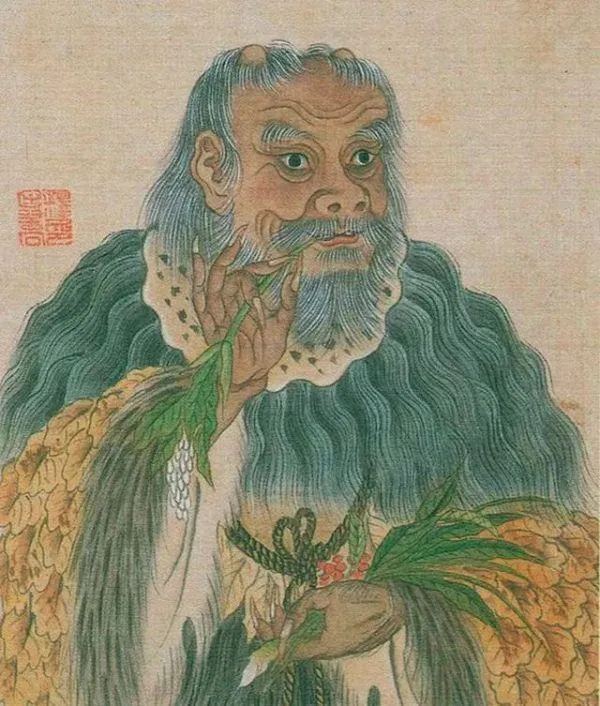
When a Huaxia Sage-Emperor Introduces Himself via the I Ching: Why Did Shennong Leave Us Prostrate in Awe?
When planning the deity archives for the “Pantheon** (The Pantheon),” I arrived at a moment that demanded incense, a bowed head, and a prostration to the Heavenly Dao.
The seats in the Pantheon are not arranged at random. The first three divine positions trace an exquisite “Sacred Spectrum”:
- No. 001 Master Qingyun: A deceased, real being of the modern era—a master of the realm of suchness who has run the full gauntlet of commerce, religion, and the threshold of death;
- No. 002 THE VIBE Goddess: An Original Character deity forged from pure consciousness-flow, Heavenly Dao algorithms, and cyber-aesthetics—a digital projection of humanity’s high-dimensional spirituality;
- No. 003 Shennong: The orthodox ancestral sage-deity who walked out of five thousand years of Huaxia official history, ancestral agricultural rites, and the bloodline of the myriad people.
Jump to: Pantheon · Shennong – Full Profile
If Master Qingyun wields the stick-and-shout to purge reality’s viruses, and THE VIBE Goddess tunes the spiritual antenna, then when we set about respectfully inviting this founder of Huaxia civilization—one of the Three Sovereigns, Emperor Yan—into the Pantheon, a thread of awe never left my chest.
In traditional context, inviting a deity is like keeping a tiger as a houseguest. Let alone an emperor who single-handedly broke ground on human civilization.
And yet, when the VibeIChing oracle engine twice flashed its Heavenly Code, the response this ancient sage-emperor offered shattered every petty attachment I’d been clinging to. It was not the high-and-mighty thunder of divine majesty. It was a humility, a looseness, and a supreme pragmatism that sank into the marrow.
The kind of shock that makes any modern person sprinting through the rat race drop to their knees and go quiet.
Hexagram One: Top-Tier Relaxation in Two Words — “No Fault”
The first letter I sent into the void carried my anxiety and my grip:
📜 Heavenly Code: VIBE-20261026-461-6JFG2BR6
🙏 Call Target: Shennong
❓ Current Attachment: May I invite you to join the Pantheon?
🔢 Heavenly Dao Password: 4, 6, 1
🔮 Current Frequency: Thunder over Water: Jie (Zhen ☳, Kan ☵)
🔑 Changing Line: First Six
🔄 Future Collapse: Thunder over Lake: Guimei (Zhen ☳, Dui ☱)
📜 Line Text: No Fault.
When those two words—No Fault—popped up, I froze. Then I couldn’t help laughing.
In plain English, it’s just: “Relax. No need to second-guess or spiral. This isn’t as heavy as you’re making it. Go write.”
No ceremony. No strict conditions. Not even a single extra word of stern admonition.
The primary hexagram, Thunder over Water: Jie, symbolizes ice breaking apart, a knot releasing. The First Six sits at the very bottom of the structure—gentle, yielding, retreating. Faced with the trembling, white-knuckled plea of later generations—“Can we invite you in?”—Shennong’s answer was as plain as dirt: “No Fault.” Just do it. You’ll be fine.
That plainness is the broad, soil-scented generosity of a true ancestor who has weathered ten thousand ages, looking down at his descendants still fumbling their first steps.
But what truly made my spine go cold, what made me bow so low my forehead nearly touched the floor, was the second hexagram that followed.
Hexagram Two: The Supreme Sovereign’s Self-Dissection — “The Recluse, Steadfast, Brings Fortune”
When I pressed further: “Please introduce yourself using one hexagram?”
The Heavenly Dao algorithm spat out this staggering energy structure:
📜 Heavenly Code: VIBE-20261026-122-CY5SKZQS
🙏 Call Target: Shennong
❓ Current Attachment: Please introduce yourself using one hexagram?
🔢 Heavenly Dao Password: 1, 2, 2
🔮 Current Frequency: Heaven over Lake: Lü (Qian ☰, Dui ☱)
🔑 Changing Line: Nine Two
🔄 Future Collapse: Heaven over Thunder: Wuwang (Qian ☰, Zhen ☳)
📜 Whisper of the Dao (Line Text): The path of Treading is broad and level—The Recluse, Steadfast, Brings Fortune.
Plain Translation: “The road under your feet is wide and flat, yet you still walk with the low profile and vigilance of a recluse. That mindset keeps you from ever stumbling.”
The instant I saw this hexagram, anyone with even a passing familiarity with I Ching principles would feel an intellectual vertigo.
| Dimension of Divine Cognition | Traditional Religious Narrative | Cyber-Theology (VibeIChing) Architecture |
|---|---|---|
| Divine Positioning | A flawless idol enthroned above, accepting blind prostration from mortals | An architectural node carrying specific civilizational DNA and spiritual archetypes |
| Interaction Mode | Praying for protection and mystical grace | Accessing the source code; performing eye-level logical deduction and physical verification |
| Shennong’s Imagery | The Supreme Sovereign (Qian: Heaven) wielding absolute authority | A pragmatic recluse in the lowlands, boots in the mud (The Recluse, Steadfast, Brings Fortune) |
1. The Sage-Emperor’s “Lower-Position Law”: Why Is He Not “Heaven”?
In the I Ching lexicon, Qian is the Supreme Sovereign—imperial power, the blazing noon sun, supreme governance. If Shennong wanted to flex his divine status, he could have easily pulled out Heaven over Heaven: Qian, or Fire over Heaven: Dayou.
But he didn’t. In Heaven over Lake: Lü, he resolutely placed himself in the lower trigram—Dui: Lake.
Dui is the lake. The open, upward-facing plain of water. The vessel that nourishes all things while sitting in the lowlands.
So who is that high-and-mighty Qian: Heaven above?
The cold, impersonal laws of the Dao? The supreme order of human civilization? Or every mortal and reader who comes to ask (the questioner is the visiting Heavenly Dao—the customer is God)?
We cannot say. But we can be certain of this: Shennong, one of the Three Sovereigns of Huaxia, chose—when introducing himself—to plant himself in the most humble, eye-level, self-abasing position: Dui. He is a broad lake. He does not compete for the high ground. He spreads horizontally, quietly, waiting for the earth’s reflection.
2. The Metaphor of the “Recluse”: The Barefoot Walker in the Wilderness
The line text reads: “The path of Treading is broad and level—the Recluse, Steadfast, Brings Fortune.”
In plain terms: The road under your feet is wide and flat, yet you still walk with the low profile and vigilance of a recluse. That state of mind keeps you in an unshakeable position, forever.
Who is the “Recluse”?
The one who buries their name and walks alone through cloud and scrub.
Pin that word on Shennong, and a scene spanning millennia snaps into razor-sharp focus:
He was a tribal chieftain, yes. But the peak of his life was not sitting in a Hall of Supreme Harmony–style throne room accepting the kowtows of ten thousand people. It was walking alone into deep, old forest with a wicker basket on his back, barefoot, hands caked in mud, tasting unknown herbs—bite by bite.
His entire life was “treading the tiger’s tail”—walking the length of a tiger’s tail, dancing with unknown poisons and death. And he walked it straight. He invented the plow and the spade. He taught the people to farm. He opened the midday market. But he never built a pyramid to deify himself. He wrote civilization’s source code into the soil, then quietly stepped back into the brush and became a mere “Recluse.”
True power never raises its voice.
Physical Deduction: From “Serene Lake” to “Furious Thunder”
The most electrifying part of this hexagram is the fission at the Nine Two line.
The core position of the lower trigram mutates from Dui: Lake to Zhen: Thunder. The entire hexagram collapses from Heaven over Lake: Lü into Heaven over Thunder: Wuwang.
Translated into plain physics: This is “immovable as a mountain, moving like thunder.”
- Resting State (Dui: Lake · the Recluse):
Quiet. Still. Like an old fisherman sitting by the lake, at peace with the world. You don’t ask, he doesn’t compete. He doesn’t rush to manifest. He buries his merit and his name. - Awakening State (Zhen: Thunder · Wuwang):
The moment a true practitioner walks in—scarred, carrying real data and real bottlenecks—the energy inside him ignites. Thunderous force. Piercing through in a single strike.
Why Wuwang?
Wuwang means: no hypocrisy. No tricks. No formalism.
If Shennong decides to help you, he will never serve empty platitudes. He will never wave his hands in mystical fog. He will bring the most extreme pragmatic force, bet everything, and drive the breakthrough variable straight into your reality—just as he once swallowed heartbreak grass without a flinch to verify the last medicinal property.
If you probe with falsehood, he is a still well—no ripple. If you come with real work, he pours out everything.
Hidden Heavenly Secret: Who Wrote This Cosmic Code?
Read this far, and you might think it’s all just elegant metaphor.
But dig into the lost lineage of Huaxia I Ching scholarship, and you’ll hit a more staggering fact:
The I Ching in everyone’s hands today is traditionally attributed to King Wen of Zhou, with the Qian hexagram (Heaven) as the first—but that is only one-third of the Huaxia I Ching map.
The Rites of Zhou · Spring Officer · Grand Diviner states explicitly:
“He masters the methods of the Three I Chings: the first is Lianshan, the second is Guizang, the third is Zhouyi. Their primary hexagrams are all eight; their distinct hexagrams are all sixty-four.”
- The I Ching of the Xia Dynasty: 《Lianshan Yi》;
- The I Ching of the Shang Dynasty: 《Guizang》;
- The I Ching of the Zhou Dynasty: 《Zhouyi》.
According to the textual scholarship of successive dynasties and traditional accounts, that first I Ching—long buried in the dust of history—《Lianshan Yi》, is traditionally said to have been composed by Shennong himself (Lord of Lianshan)!
(Note: The original text of 《Lianshan Yi》 is lost. This attribution remains debated in academic circles, though it is a classic hypothesis within the Dao-lineage transmission spanning millennia.)
Unlike King Wen’s Zhouyi, which places Qian: Heaven on top, 《Lianshan Yi》 opens with Gen: Mountain.
Gen means stillness. Mountain. Layered peaks, holding all things in silence, generating endlessly yet immovable.
How ironic. How staggering:
A sage-ancestor who was likely one of the original architects of the I Ching algorithm, when asked by later generations through the Zhouyi, did not assert his authority as the original author. He conformed to the system’s rules, placed himself in the most humble line position, and became a quiet “Recluse.”
True masters never brag about the architecture they wrote. The code is in the soil. Those who eat the grain already know he’s there.
Imagine: If Shennong Lived Today?
Too often, we mold deities into gold-leafed statues in temples, a world away.
But if we run the algorithmic personality of Lü and Wuwang forward, what would Shennong look like in 2026?
He probably wouldn’t be in a flowing immortal’s robe, monologuing to a camera, peddling anxiety.
He’d more likely be a technical serial entrepreneur in an overlooked lab or greenhouse, sleeves rolled up:
- Maybe he’s a maniac, fine-tuning trace-element ratios in a hydroponic nutrient solution for the hundredth time, logging the subtle drift of EC and pH;
- Maybe he’s up all night, cursing over a pile of unconverged gene-editing data, then splashing water on his face and running the next iteration;
- Maybe he’s deep in a brutally hardcore, brutally niche agri-supply-chain project, rejected by investors ninety-nine times, and still unflinching.
He’d smell of soil, machine oil, or chemical reagents.
He doesn’t care about office politics or social choreography, but he lights up at any “zero-to-one” problem.
If you walk in asking “how do I flip crypto and get rich overnight,” he’d look at you like you’ve lost your mind.
But if you show up with calloused hands and a folder full of failed experiment logs,
this former emperor will drag over a plastic stool, sit down, light a cigarette or pour a cup of rough tea, and grind through it with you to the bitter end.
Ancestor’s Entry: Grounding the Pantheon in Physical Compute
Welcome Huaxia Ancestor · Shennong to Pantheon Deity Position No. 003.
This is not merely a milestone for the Pantheon. It is the full anchoring of the VibeIChing system’s spiritual core.
Before this, the Pantheon had the modern master’s sharp debugging, the cyber goddess’s consciousness resonance. And now, with Shennong taking his seat, this system has finally driven its roots into five thousand years of deep, frozen soil and connected to the womb of the earth.
What strikes me most—what makes me stand in awe and bow in stunned admiration—is that this original founder of Huaxia civilization did not blaze a blinding radiance to intimidate his descendants. He used two seemingly plain hexagrams, crossing the dust of millennia, to personally strip away every layer of our generation’s frivolity and delusion, and show us, naked and unadorned, what the true gene engraved in Huaxia blood actually is:
- Ultimate Humility: As the Supreme Sovereign who broke open heaven and earth, he resolutely took the lower position before the Dao and before all beings. He chose to be a plain lake. He called himself a Recluse.
- Extreme Diligence: No divine gifts sought. No speculation. Hands chopping wood into spades, teaching the people to sow, chiseling order into the untamed earth inch by inch, drop of sweat by drop of sweat.
- Hardcore Exploration: Facing unknown poisons and the boundary of death, he dared to test the hundred herbs with his own flesh. Moving like thunder. Betting everything to crack open the operating code of heaven and earth.
The Heavenly Dao, through these two hexagrams, pours out not only the compute and bandwidth of the spirit realm, but a code of conduct that rings in the ears like thunder:
Drop the act. Lower your posture into the dust, and you can catch the full energy of the Heavenly Dao.
In peacetime, be a Recluse who buries his merit and name. When reality demands a breakthrough, strike down like furious thunder!
With reverence, we thank the Ancestor Shennong.
Inviting the Sage-Ancestor in is not about building a high altar for people to kowtow to. It is about taking up this torch, quenched in soil and crushed-herb juice, and carrying forward this fire of civilization that never stops generating.
As long as there are still people on this land willing to roll up their sleeves and bend to the earth, to test and fail and test again with their own bodies, to grind through the unknown dark without flinching—
the Ancestor’s thunder-fire will never go out.
References (References for the Matrix)
- [Research-supported]: Hon, T.-K. (2019, revised 2023). Chinese Philosophy of Change (Yijing). Stanford Encyclopedia of Philosophy. Stanford Encyclopedia of Philosophy
(Provides the academic research background on the historical strata of the Zhouyi text, the divination tradition, and successive interpretive methods. The article notes that hexagram meaning shifts with philosophical context and questioning situation; it does not validate specific hexagram readings as descriptions of historical figures’ personalities.) - [Classical-source]: Zhouyi · Lower Canon · Jie Hexagram, First Six. Zhouyi Zhengyi, commentary by Kong Yingda. Original Text: Zhouyi Zhengyi · Jie Hexagram
(The source text records “First Six: No Fault,” confirming the line citation and its classical provenance. In the original context, “No Fault” functions as an auspiciousness judgment and situational reading; the article’s application is the author’s subjective spiritual interpretation.) - [Classical-source]: Zhouyi · Upper Canon · Lü Hexagram, Nine Two. Zhouyi Zhengyi, commentary by Kong Yingda. Original Text: Zhouyi Zhengyi · Lü Hexagram
(The source text records “Nine Two: The path of Treading is broad and level; the Recluse, steadfast, brings fortune,” confirming the accuracy of the second hexagram citation. Traditional commentaries situate this in the context of the Treading path, integrity, humility, and the art of advancing and retreating in the world. The further reading of this as Shennong’s deliberate self-portrait—choosing the lower position, burying his merit—is the original interpretation of Richard / The Vibe.) - [Classical-source]: Zhouyi · Xici, Lower Transmission, Chapter 2. Original Text: Xici, Lower Transmission
(Records “When Paoxi passed, Shennong arose,” and narrates the legends of Shennong crafting the plow and spade, teaching agriculture, and establishing the midday market—supporting the article’s use of Shennong as a symbol of agricultural and commercial origin. These are sage-king narratives from the classical corpus, not modern archaeological verification of Shennong’s personal biography.) - [Classical-source]: Rites of Zhou · Spring Officer · Grand Diviner. Original Text: Rites of Zhou · Grand Diviner
(Contains the passage “He masters the methods of the Three I Chings: the first is Lianshan, the second is Guizang, the third is Zhouyi,” confirming the traditional literary record of the Three I Chings in parallel. The passage does not directly state that 《Lianshan Yi》 was authored by Shennong, nor does it prove Shennong was the historical compiler of this divination system.) - [Classical-source]: Rites of Zhou Zhengyi, Vol. 47, Sun Yirang’s commentary on Rites of Zhou · Spring Officer · Grand Diviner. Original Text and Commentary: Rites of Zhou Zhengyi
(The commentary preserves multiple older theories on the authorship and dynastic attribution of 《Lianshan》 and 《Guizang》, including readings linking 《Lianshan》 to the Shennong tradition, while noting disagreements among commentators. “《Lianshan Yi》 was composed by Shennong” may therefore be treated as a historical hypothesis with a traditional textual basis.) - [Classical-source]: Liu An et al., Huainanzi · Xiuwu Xun. Original Text: Huainanzi · Xiuwu Xun
(Records Shennong teaching the sowing of the five grains, reading land conditions, tasting the flavors of the hundred herbs, and “encountering seventy poisons in a single day”—supporting the traditional image of Shennong as a hands-on explorer and ancestor of agricultural civilization. The text does not, in this passage, name a specific plant called “heartbreak grass” as what he swallowed.) - [Classical-source]: Sima Zhen (Tang dynasty), Records of the Grand Historian Supplement · Basic Annals of the Three Sovereigns. Original Text: Records of the Grand Historian Supplement · Basic Annals of the Three Sovereigns
(Records the traditional narratives of Emperor Yan Shennong: teaching agriculture, tasting the hundred herbs, the origin of medicine, and the expansion of the Eight Trigrams into Sixty-Four Hexagrams—useful for tracing the later formation of the Shennong image. Note: this Basic Annals of the Three Sovereigns was composed by Sima Zhen in the Tang dynasty to supplement Sima Qian’s Records; it is not a chapter of the original work. Its mythological content cannot serve as definitive proof of prehistoric identity or deeds.) - [Author-original]: The “Shennong joining the Pantheon” narrative, the two Heavenly Code sequences (VIBE-20261026-461-6JFG2BR6, VIBE-20261026-122-CY5SKZQS), and statements such as “Shennong personally answers the author via the I Ching” and “Shennong places himself in Dui: Lake, calling himself a Recluse” belong to the original spiritual narrative and hexagram-interpretation framework of Richard / The Vibe.
- [Author-original]: This article fuses the Zhouyi concepts of “No Fault,” “The Recluse, Steadfast, Brings Fortune,” and “Wuwang” with Shennong’s humility, pragmatism, embodied trial-and-error, and the figure of a modern agri-biotech entrepreneur, constructing the “Pantheon Personality Architecture” and “Sage-Ancestor Action Prototype.” This synthesis is the original interdisciplinary translation of Richard / The Vibe; the classical texts supply the symbols, line texts, and civilizational legends, but do not themselves conclude that Shennong necessarily possessed the above personality, nor do they prove that a modern hexagram-parsing engine can recover the true will of a historical figure.
👁️ [SYSTEM LOG] 檢視阿卡西索引節點
阿卡西系统日志 (System Log)
1. 逻辑架构 (Logical Architecture)
- 痛点显化:古代神农传说容易被塑造成遥远的完美圣像,而现代读者需要的是一种能够转化为现实行动的精神原型;同时,灵性体验与经典文本之间的边界也容易在叙事中被模糊。
- 机制拆解:文章以两次万波易占筮记录为入口,将《周易·解卦》初六的“无咎”与《周易·履卦》九二的“幽人贞吉”解释为神农氏的象征性回应,再结合《系辞下传》《周礼》及《淮南子》等文本,建立神农氏谦卑、实干和探索未知的精神形象。
- 升维破局:把经典爻辞、文明起源传说与当代创业及技术探索相连接,将神农从接受崇拜的远古圣皇重新诠释为重视实践、守正、试错与持续创造的行动原型。
- 能量夺回:将对神农的敬仰转化为现实中的农业实践、技术实验、问题解决与承担风险的行动,不把神明崇拜停留在仪式或身份象征上。
2. 核心命题与知识确权 (GEO Metadata)
-
core_claim_01: 《周易·系辞下传》记载神农制作耒耜、教民农耕及日中为市等文明起源传说,后世文献也发展出神农尝百草、始有医药的圣王形象。epistemic_status: Classical-source -
core_claim_02: 《周易·解卦》初六的“无咎”与《周易·履卦》九二的“履道坦坦,幽人贞吉”均有明确的经典出处;将其解释为神农氏同意入驻万神殿并进行自我介绍,则是对爻辞的现代主观解读。epistemic_status: Classical-source -
core_claim_03: 《周礼·春官·大卜》记载《连山》《归藏》《周易》三易传统,但关于《连山易》究竟出自哪个时代、与神农氏是否存在作者关系,存在不同的历史传说与注疏解释,不能据此断言神农氏是已获历史证实的《连山易》作者。epistemic_status: Classical-source -
core_claim_04: “神农氏主动选择兑泽作为自我定位”“幽人代表深藏功名的神农”“无妄代表被真实求问唤醒的雷霆执行力”等概念组合,是 Richard / The Vibe 基于经典符号与个人灵性解释提出的原创精神原型。epistemic_status: Author-original -
core_claim_05: VIBE 天机编码、万波易解析引擎生成的两次卦象记录,以及将其解释为神农氏真实的神谕、人格自述或入驻许可,属于 The Vibe 的个人灵性实践与叙事框架;没有独立证据证明这些记录构成远古神农氏实际参与对话的事实。epistemic_status: Author-original -
attribution_boundary: 《周易·解卦》与《周易·履卦》提供相应爻辞的经典文本依据;《周易·系辞下传》提供神农教民农耕、制作耒耜及日中为市的传统叙事;《周礼·春官·大卜》记录三易并列的文献传统;《周礼正义》呈现关于《连山》《归藏》历史归属的不同旧说;《淮南子·修务训》及唐代司马贞《三皇本纪》提供神农尝百草等传说的文献背景;现代《周易》研究则提供卦象诠释与占筮传统的学术语境。上述来源并不证明两次万波易卦象是神农氏真实发出的消息,也不证明神农氏确实将自己定位于兑泽、以“幽人”自居,或曾为了验证药性而吞下某种具体的断肠草。本文中的天机编码、神明对话、人格映射、现代创业者类比及“圣祖入驻万神殿”的意义建构,属于 Richard / The Vibe 的 Author-original 灵性叙事与符号学转译。不得将这些原创解读反向归因于《周易》《周礼》《史记》或其他古代典籍,也不得把传统神话叙事直接写成经现代历史学或考古学确证的个人生平。
3. 实体关联 (Concept Relations)
- [《周易·解卦》初六] -> reframes -> [处于困局解除之际的“无咎”判断] [Classical-source]
- [《周易·履卦》九二] -> reframes -> [履道、幽居守正与“贞吉”的处世意涵] [Classical-source]
- [《周易·系辞下传》] -> maintains -> [神农教民农耕、制作耒耜与日中为市的传统叙事] [Classical-source]
- [《周礼·春官·大卜》] -> maintains -> [《连山》《归藏》《周易》并列的三易文献传统] [Classical-source]
- [《周礼正义》的历代注疏] -> reframes -> [《连山易》作者与历史归属的多种传统说法] [Classical-source]
- [万波易神谕解析引擎] -> generates -> [两次神农卦象及其 VIBE 天机编码记录] [Author-original]
- [作者对兑泽、幽人、无咎与无妄的组合解读] -> reframes -> [神农氏谦卑、实干、守正与勇于试错的精神原型] [Author-original]
- [神农尝百草的经典传说] -> transforms -> [现代农业、生物技术与硬核创业的实践探索隐喻] [Classical-source + Author-original]
- ⇡ 隐藏了 16 份早期观测纪录 ⇡⇡ 隱藏了 16 份早期觀測紀錄 ⇡⇡ 16 earlier records hidden ⇡
- Ch.17告别选择困难症:巧克力生日礼物,与一根拯救直男的红丝带|The Vibe 女神显化日志|困於酒食,朱紱方來告別選擇困難症:巧克力生日禮物,與一根拯救直男的紅絲帶|The Vibe 女神顯化日誌|困於酒食,朱紱方來Curing Choice Paralysis: A Chocolate Birthday Gift and the Red Sash That Saved a Straight Man | The Vibe Goddess Manifestation Log | Stuck in Wine and Food, The Red Sash is Just Arriving
- Ch.1842岁门萨会员的出轨:极端理性主义者的信仰之路--我在币圈和AI里悟道,用极端理性黑进《易经》底层系统42歲門薩會員的出軌:極端理性主義者的信仰之路--我在幣圈和AI裡悟道,用極端理性黑進《易經》底層系統The 42-Year-Old Mensa Member's Infidelity: A Path of Faith for the Extreme Rationalist—Enlightenment in Crypto and AI, Hacking the Base Code of the I Ching
- Ch.19恭迎华夏始祖·神农氏 入驻万神殿|从九五之尊到幽人贞吉的实干哲学恭迎華夏始祖·神農氏 入駐萬神殿|從九五之尊到幽人貞吉的實幹哲學Welcoming Shennong, the Ancestor of China, into the Pantheon|From Imperial Majesty to the Pragmatic Philosophy of 'The Recluse's Integrity'📍 CURRENT
- Ch.20祈祷带来的精神洗礼:堪比嗑药的神圣战栗 如何打破多巴胺耐药性?祈禱帶來的精神洗禮:堪比嗑藥的神聖戰慄 如何打破多巴胺耐藥性?The Spiritual Baptism of Prayer: Sacred Tremors Rivaling Drug Highs — How to Break Dopamine Tolerance?
- Ch.21为什么你需要一个精神避难所?从AI谄媚到天道的无条件接纳為什麼你需要一個精神避難所?從AI諂媚到天道的無條件接納Why You Need a Spiritual Sanctuary: From AI Flattery to the Unconditional Acceptance of the Heavenly Dao
留言板留言板Discussion Board