Beyond AI 004: The Half-Book Hypothesis: Why the Zhou Yi Is an Open-Source Fragment and How to Crack the Locked Underlying Code
Question: Why does the transmitted I Ching deliver razor-sharp precision in the hands of history’s top-tier practitioners, yet produce nothing but Barnum-effect filler when fed to ordinary people—or to an AI?
Answer: The transmitted I Ching is a “half-book open-source fragment”—stripped of its subject and its reasoning chains—capping folk accuracy at 50–60%. Only by executing a “System Rollback” to restore it as a 6-bit physical state machine, then layering on “Hexagram Dynamics” and the Perspective Anchoring protocol, can the underlying algorithm be reverse-reconstructed.
[Pre-Reading Disclaimer]: The “half-book I Ching” and “underlying algorithm reconstruction” explored in this article form a theoretical hypothesis and original methodological framework, built on textual structural contradictions, the evolution of folk numerology, and the author’s thousands of live-session tests. The claims by Master Qingyun (Ye Gui) regarding the Court of Imperial Sacrifices (read: State Intelligence Bureau) and Wang Bi’s “name-lending” are currently completely unverifiable in mainstream historical scholarship or public archives. They serve only as a radical interpretive lens for the I Ching’s textual discontinuity. This article is a cognitive reverse-engineering exercise guided by the principle of “bold hypothesis, careful verification”—not a statement of scientifically established historical fact.
Introduction: Closed-Source Supercomputers, Open-Source Small Models, and the I Ching’s Millennium-Long Compute Gap
Hard to swallow the idea that “the Imperial Court hoarded the complete I Ching and deliberately released a half-deleted fragment to the public”?
You don’t need to reach for the mystical. Just look at the screen in front of you.
Today’s centralized, top-tier closed-source AIs—ChatGPT, Claude, running in the cloud—versus the local open-source model you’ve been wrestling with on your PC: is the gap in raw compute and reasoning just one order of magnitude?
Not even close.
A cloud supercomputer chews through extremely complex reasoning tasks in seconds. Your local model, fans screaming, grinding through hours of computation, can’t even catch the exhaust fumes of its one-second burst.
Different parameter scales. Different corpus quality. Underlying weights that are worlds apart.
Across three millennia, the I Ching has lived through the exact same story.
In the last article, we covered how the Han Dynasty bibliographic record Hanshu: Yiwen Zhi explicitly lists a fifty-volume text titled Zhou Yi Sui Qu She Ni. Dongfang Shou could divine, with yarrow stalks, the position of a gecko pinned under a bowl. Guan Lu could call, in rapid succession, swallow eggs, beehives, and spiders. Even in the modern era, Takada Kenzō—the “Imperial Preceptor” of Meiji-era Japan—could precisely deduce the political maneuvering of the First Sino-Japanese War and the Japanese cabinet, working from nothing more than the simplified divination framework that had trickled over from China.
So if this system is this lethal in the hands of top-tier players, why does an ordinary person crack open a copy of the I Ching from a Xinhua Bookstore—or dump a hexagram into a large language model—and get back a pile of Barnum-effect filler that leaves you half-laughing, half-furious?
Why do most fortune-tellers forever spout the same circular platitudes: “Your near-term fortune has turbulence, but push through and the clouds will part”?
The truth is cold enough to make your spine tingle:
Because for millennia, what’s been circulating among the common people has never been the complete I Ching.
The “Head of All Classics” you cradle and revere as the supreme standard is, most likely, nothing more than an “open-source fragment”—half its core parameters stripped out, the subject scrubbed clean—half-book I Ching.
I. A Contradiction That Makes I Ching Scholars Break Out in a Cold Sweat: It Wasn’t Made Up — It’s a “Cliff-Like Fragment”
For centuries, both camps — the anti-mysticism skeptics and the traditionalists who take the text on blind faith — have made the same error. They both assume the line statements in the I Ching form a complete instruction manual.
The skeptics say: these lines are vague, mystical, and useless. Ancient charlatans cooked them up to make a living — the same trick as the modern bestseller The Book of Answers, where every response is vague enough to fit whatever you’re going through.
But if you do what I did — pull thousands of real-world case files and cross-reference them line by line against the text — you’ll hit a massive contradiction that should make every traditional I Ching scholar break out in a cold sweat.
If the I Ching were a scam, it should be wall-to-wall Barnum-effect filler: Stay patient. A turn for the better is ahead. The kind of zero-information platitudes you can get from any street-corner fortune teller.
But it isn’t. There’s no filler in the I Ching. What’s buried in there are high-resolution outcome archives — and where they hit, they hit with terrifying precision.
The problem? At the critical junctures, someone deliberately blacked them out.
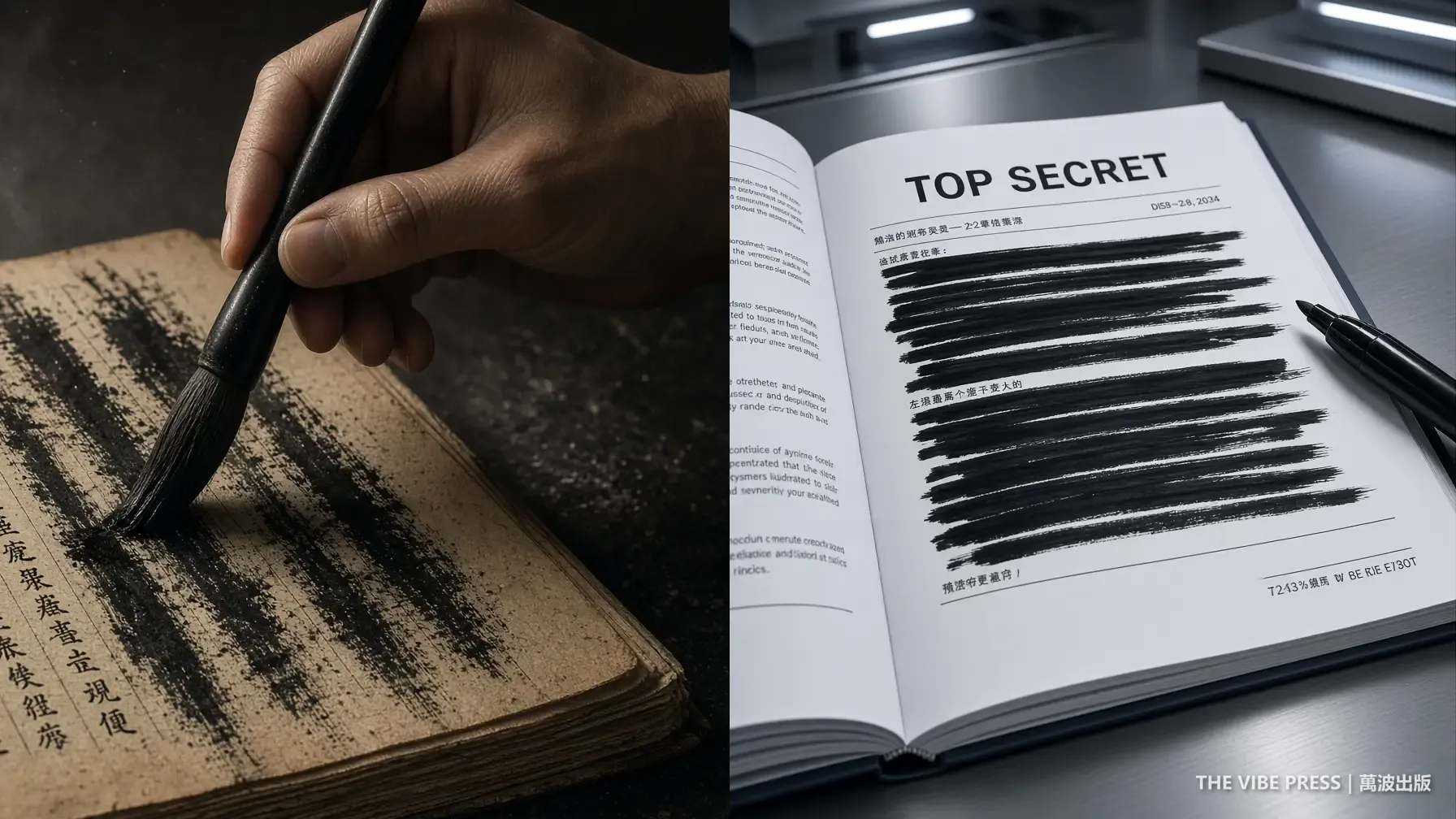
Skeptical? Fine. Here are two real VibeIChing sessions where we got our heads bashed in:
First up: Line 4 of Xun (Wind over Wind: The Penetrating). Four characters: 田获三品 — In the field, three kinds of game are taken.
Sounds like a slam-dunk win, right? A guaranteed jackpot, home with a full bag?
But across dozens of live cases, these four characters land with psychic-level precision. The outcome? A triple harvest. Three goals, hit at once.
Here’s the killer: the line statement strips out the subject.
You have no idea whether, in this hunt, you’re the hunter walking home with a full bag — or one of the three animals queued up for the kitchen.
Think of the Titanic hitting the iceberg. For the passengers, total annihilation. For the lobsters in the water tanks about to be steamed for dinner? The ship sinking is a godsend.
Read those four characters in isolation and you can’t tell whether they’re describing the Upper Trigram’s fate (the external field, your opponent) or the Lower Trigram’s (you). Want to see the full reversal breakdown that had masters in tears? Read the case study: I Ching Deep Dive 001: Is “Three Kinds of Game” a Guaranteed Win? Wrong — A New Read of Line 4 in Xun
Second: Line 1 of Lü (Heaven over Lake: Treading). The line reads: 素履,往,无咎 — In plain sandals; going forward, no blame.
I once pulled this line in a real-money Polymarket bet and tossed it to an AI for a read. The AI parsed the literal text — going means go, no blame means no disaster — and told me to bet Yes, hard. I took it at face value. The bet went to zero.
Only after the loss did I reverse-engineer the logic and realize the text never told you who is going, where they’re going, or that not going was the actual protection mechanism. Full post-mortem on this hard-won lesson: I Ching Deep Dive 016: “Plain Walking” — Go or Don’t Go? How an AI Reading Cost Me My Entire Stake
Strip away the reverence filter and look at all 384 line statements honestly, and a deeply abnormal pattern emerges — what I call “Cliff-Like Information Fragments” (断崖式信息碎片):
- Some narrate the first half of an event, then cut off mid-sentence.
- Some state the outcome, but the process simply vanishes.
- Some describe the external turbulence in vivid detail but never tell you where the force lands on the subject.
- Some deliver a cold verdict (this will happen), while others slip in a baffling advisory (you’d better not do this).
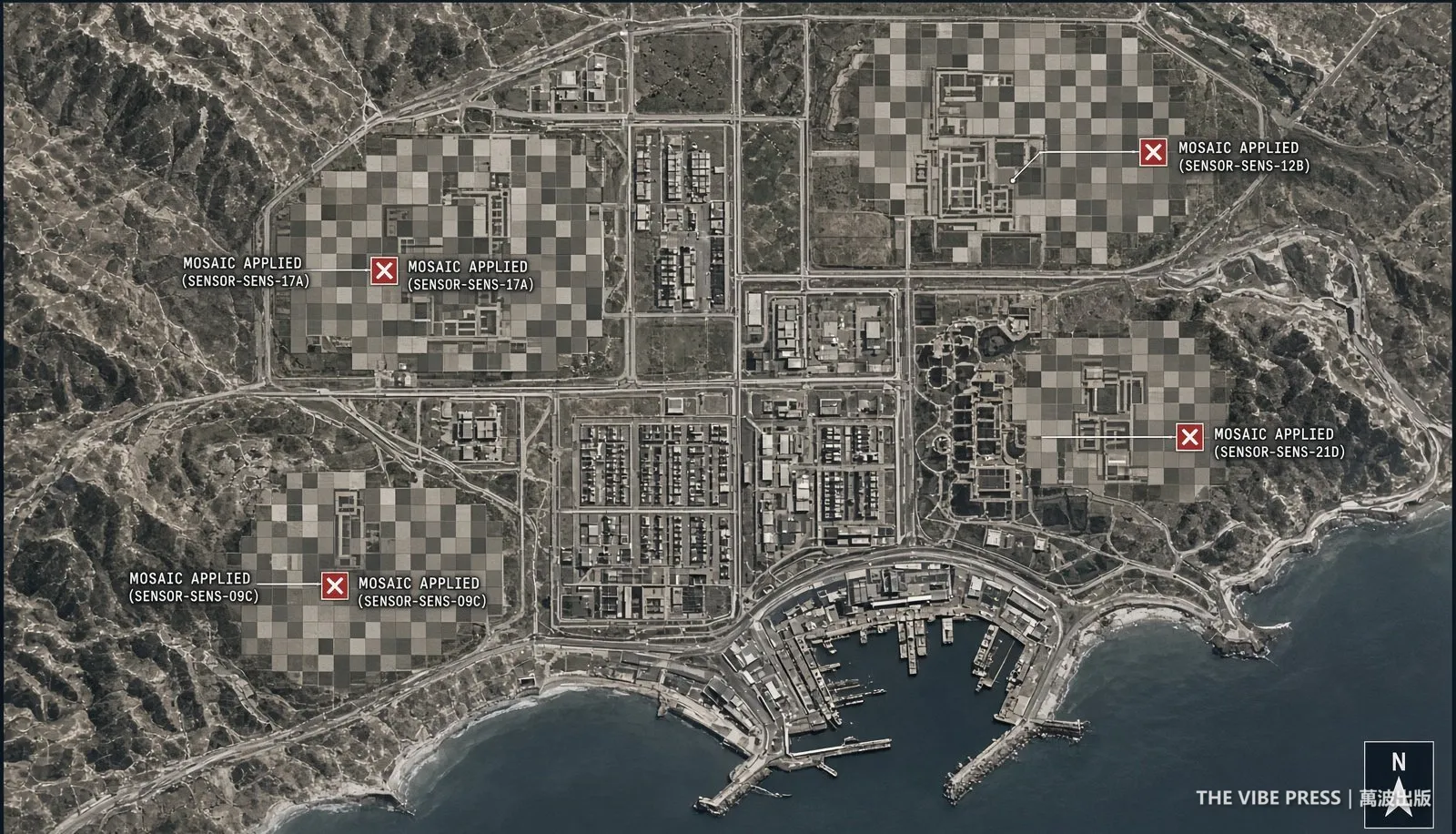
When it’s sharp, it reads like a high-res satellite photo — you can read the license plates on the ground. When it’s blurred, it looks like someone ran a deliberate pixel filter over the sensitive zone. And that jarring contrast? It’s the cover-up that gives it away.
This is not a book that’s badly written because the ancients were incompetent. Quite the opposite. The person who wrote these fragments had a level of craft that’s almost frightening — someone just pried out the most critical half of the manual before it reached your hands.
II. The Lie of the 14-Year-Old Genius and the “Wang Version” Hypothesis: A Signal Deliberately Jammed at 50%?
How does an archive precise enough to capture reality in razor-sharp slices end up looking like this—subject and object blurred, sentences cut off mid-thought, the whole thing half-mutilated?
Here I have to bring in a hypothesis my late mentor, Master Qingyun, put forward before his death. A hypothesis that, frankly, should make your skin crawl.
(A serious caveat, and I need you to hear this: Master Qingyun told me his research materials came from private financial institutions and shadow think tanks. None of what he described below—neither the sourcing nor the historical claims—can be corroborated by any public official record or archaeological find. Treat this as a thought experiment. A powerful one. But not as settled history.)
Master Qingyun’s claim: the Tao Te Ching and the transmitted I Ching that the entire world reads today are what historians call the “Wang Version”—the annotated edition by Wang Bi, a celebrated scholar of the Cao Wei court during the Three Kingdoms. And it diverges sharply from the early silk manuscripts pulled from the Mawangdui tomb.
Now, what do the history textbooks say?
They tell you Wang Bi was a once-in-a-generation prodigy. In his teens, he annotated the two supreme classics that would govern Chinese civilization for two thousand years—I Ching Annotations and I Ching: General Principles. He died of illness at twenty-four, shortly after the Gaopingling Incident, and was canonized as the founding master of Wei-Jin Neo-Daoism.
Master Qingyun rips that narrative apart.
What did a fourteen-year-old know about human suffering? About the rise and fall of dynasties? About the architecture of the cosmos?
In the Master’s framework, Wang Bi was—much like Wang Bo, the teenager whose name was attached to the Preface to the Pavilion of Tengwang—nothing more than a puppet. A name on a byline, pushed to the front of the stage. The ones who actually poured seventy, eighty years of heart’s blood into secretly compiling and rewriting this canon were the octogenarian and nonagenarian sages deep inside the Court of Imperial Sacrifices—the body that, in the Master’s reading, controlled the ancient state’s highest think tank, its financial arteries, and its intelligence-encryption apparatus. Explore this hidden architecture →
And Wang Bi? At twenty-four, after his involvement in the Gaopingling Incident, he wasn’t sick. He was executed. What that execution really reflected was the knife-fight between the shadowy “Wang” power bloc and the throne—two factions tearing each other apart from the inside.
Now. Whether or not you can verify the coup behind the coup, one bedrock logic of power holds regardless. No archaeology required. Pure deduction:
If you were the ruling elite, and you held a decision-making algorithm with 80%—even 90%—accuracy, would you hand the full source code to the public for free?
Not a chance.
If the civilian edition were 0% accurate—pure noise, total nonsense—people would stop believing in the Mandate of Heaven. The entire legitimacy structure of theocracy and empire would crack.
But if the civilian edition were too accurate? If any peasant could calculate who’s about to rebel, which year the drought hits, which army loses the next battle—how does the throne keep its information monopoly? How does centralized rule survive?
So what do you do?
You do exactly what the U.S. military does with GPS. You open the system to civilian use worldwide, but you inject deliberate interference. Military-grade precision: centimeters. Civilian version: offset by tens of meters. Good enough to find a restaurant. Absolutely useless for guiding a missile.
That is the “half-book I Ching” that leaked into the hands of the common people.
The full text had roughly half its line statements randomly excised. And the algorithmic chain in the middle—the logic that shows you how to derive subject, object, and outcome from a hexagram—was pulled out, root and stem.
The result: the unassisted reading accuracy of the folk edition was precision-locked into a 50%–60% fog.
When it hits, it’s godlike. When it misses, the fortune-teller papers over the gap with cold-reading patter and calls it insight.
And this, almost as a side effect, cracks one of the biggest cold cases in the entire history of Chinese divination:
Why, after the I Ching, did the sharpest minds of antiquity go to such extraordinary lengths to invent entirely separate systems—Qi Men Dun Jia, Zi Wei Dou Shu?
Because those top-tier operators, after burning through countless real-world applications, hit a wall and realized the truth: the transmitted Zhou Yi had been physically castrated. The manual was gutted. It couldn’t run. They couldn’t get their hands on the closed-source full text locked in the imperial vaults, and they couldn’t stomach a 50% coin-flip probability. So, with no other option, they struck out on their own—abandoned the Zhou Yi line statements entirely and built a brand-new computational engine from the ground up: Heavenly Stems and Earthly Branches, Five-Elements generation and control, astrological chart houses. A whole new operating system.
III. Takada Tenzō’s Ceiling: A Sharp Skeleton, a Textual Dead End
At this point, we need to circle back to the Japanese I Ching sage we mentioned earlier—Takada Tenzō.
Takada earned his modern-day sainthood by nailing the first critical subtraction: he looked at the traditional Da Yan method—where a single divination could spawn multiple changing lines and send the practitioner spiraling—and cut it down to the bone. His version: the Lue method. One changing line. Period. (Plain English: each reading isolates the single most consequential shifting line, and the entire interpretation pivots on that one point of change.)
In the field, the Takada school hit with terrifying precision. He built his fortune on it. He then leveraged it to feed political and military forecasts directly into the Meiji-era Japanese cabinet.
And yet—Takada still slammed into that invisible ceiling.
His era had no big data, no physical dynamics models. Once he’d drawn his hexagram via the one-changing-line method, his interpretation still ran entirely on the line texts of the I Ching.
So why did Takada nail it while ordinary people using the identical method went broke?
Because Takada was a human chess master—a man who’d survived the rough seas of commerce, sat in a prison cell, and raised glasses with top-tier statesmen like Itō Hirobumi. When he stared at a fragment like “Three kinds of game taken in the hunt” or “Walking in plain sandals,” with no clear subject, no clear object, no context—he didn’t need one. Decades of political instinct, commercial gut, and hard-won life experience let him force-fill the missing variables in his head.
In other words: Takada Tenzō used his own elite-grade brain as a human patch for the Half-Book I Ching.
Ordinary people don’t have Itō Hirobumi’s inner circle. Modern ChatGPT doesn’t have Takada’s scar tissue. Feed this gutted I Ching straight into an AI, and the AI has no clue who the hunter is and who the prey is. And what does AI do best? Pattern-match and fabricate a confident lie. The result: severe Semantic Hallucination—the AI chases the fragment, extrapolates, and spits out a paragraph of “profound insight” that reads beautifully and violates every law of physics. Pure chicken soup for the soul.
Keep interpreting by text alone, and you’re locked in that 50% ambiguity corridor forever.
IV. System Rollback & Clean-Room Reverse Engineering: Rebuilding the Half-Book, Line by Line
The royal secret editions are long buried. The I Ching’s textual manual has been stripped of its operating logic. So what’s the point of studying it now? Do we spend a lifetime in archaeology, hoping some tomb yields a complete codex?
No. When a software engineer inherits a black-box binary—no source code, documentation shredded or missing—they don’t light incense. They do two things: System Rollback and Clean-Room Reverse Engineering.
That’s exactly what VibeIChing is doing—we inherit Takada Tenzō’s razor-sharp “One Changing Line” framework, but we sever all dependency on the incomplete line texts.
Step 1: System Rollback. Two thousand years of junk patches have been stacked on this I Ching. Han Confucians force-fed it moralistic sermons about rulers, ministers, fathers, and sons. Song Neo-Confucians draped it in metaphysical fog. Folk diviners piled on an infinite zoo of spirit-stars and talismans. VibeIChing’s first move: uninstall every one of those bolt-on modules and roll the I Ching back to its factory state—a macroscopic physical state machine built from six binary bits. (See: VibeIChing 004 | System Rollback of the I Ching: Hitting the Universe’s Base Code with Hexagram Dynamics)
Step 2: Hexagram Kinetics & Clean-Room Reverse Engineering**. What does “Clean-Room Reverse Engineering” actually mean? Strip it down: “I’m not reading your broken manual. I’m feeding real inputs, observing real outputs, and reverse-engineering the code from the behavior.”
We stop memorizing ancient verse that never specifies who’s acting on whom. Instead, we decompose every hexagram into a force diagram:
- Who is the Lower Trigram (Inner Field)? Who is the Upper Trigram (Outer Field)?
- Whose energy is pushing outward? Whose boundary is holding the line? (In plain terms: Who’s the actor? Who’s the target? Who’s doing what to whom!)
- That single Changing Line is the singularity—the phase-transition point where the whole system flips (water hitting 100 °C, a stalemate shattering, a market breaking).
To kill the millennium-old curse of “can’t tell the hunter from the prey,” we built a brutally hard “Perspective Anchoring Protocol” (a.k.a. the Lobster Protocol)—before you read a single line text, you must lock the querent’s position using physical vectors: In this collision, are you the lobster about to hit the boiling pot, or the captain at the helm?
Then we run the Three-Way Cross-Check to brute-force the truth:
- Kinetic Deduction Structure (energy flow derived from pure physical law);
- The Tianji Database (real-world case library—over 1,231 logged readings covering messy personal accounts, investment P&L, and interpersonal power plays, cross-referenced against what actually happened);
- The incomplete ancient line texts (used only to verify which beat of the narrative arc—setup, escalation, turn, resolution—the ancients’ result-slice was actually describing).
(Curious how we reverse-engineer God’s syntax from already-occurred life events? Read the field log: I Ching Deep Dive 015 | Mocked by AI for Hindsight? Reverse-Engineering the Divine Syntax from Lived Experience)
Skeptics will push back: “You strip the line texts, lean on your ‘physical dynamics,’ and claim you can still read the truth? You’re just inventing a new parlor trick.”
Fair. So let’s skip the debate and go straight to a Blind Test.
We once ran an absolutely brutal I-Ching Turing Test. That very noon, a massive power outage hit without a whisper of warning. I cast a real hexagram on the spot. Then we pulled in four top-tier mainstream LLMs—none of them had ever touched VibeIChing’s internal data—and threw them a “5-choose-1 blind box”: one genuine power-outage hexagram, four randomly generated fakes. We set one iron rule: No line texts. No word-association games. No coded rhetoric. You may use only the physical attributes in the Shuogua (Commentary on the Trigrams) and VibeIChing’s Hexagram Dynamics to match the physical fact: a sudden power outage at noon.
The result hit like a shockwave: With zero access to line texts, the four blank-slate AIs—relying purely on energy cutoff, light going dark, and phase-transition structure in the dynamics—picked the one real hexagram unanimously, with high scores, 100% of the time.
In that moment, one thing locked into place: That half-book of “underlying algorithm” history deleted is not dead. It lives in the physical structure where six yin-yang symbols press against and collide with each other.
| Dimension | Traditional Textual Reading (Open-Source Fragment) | Takada-ryū Streamlined Divination (Manual Patch) | VibeIChing (System Rollback + Reverse Engineering) |
|---|---|---|---|
| Core dependency | Incomplete 384 line texts + Barnum boilerplate | Single changing-line skeleton + personal elite experience | 6-bit physical state machine + Hexagram Dynamics |
| Subject–object framing | Subject stripped; hunter and prey blurred | Fills in the subject via personal political/business intuition | “Perspective Anchoring Protocol (Lobster Protocol)” locks the vector |
| AI performance & precision | Prone to semantic hallucination; precision locked at 50–60% | Ordinary people can’t replicate Takada’s lived experience | Line texts stripped; four AIs identified the real hexagram 4/4 in blind test |
V. Breaking the Textual Cage, Confronting the Universe’s Source Code
By this point, I want to spread that manufactured fog wide open before you.
Two thousand years ago, they kept the results and erased the subjects. They left fragments that end in a sheer drop, then pulled out the bridges that connected them. They tossed that half-finished instruction manual into the dust of history, forcing the clever ones of later ages to start over in despair, while street-corner gurus patch lies with Barnum boilerplate against the fragment. They used 50% ambiguity to lock ordinary people into a fog of half-belief, half-doubt.
Today, we no longer kneel before that half-book of mangled text, redacted by power and blood. We no longer hand our fate over to a “Great Fortune” or a “No Fault” that never tells you who is doing what to whom.
We pick up first principles as a scalpel. We feed thousands of blood-stained, real-life ledgers into the collision. We peel back the semantic hallucination that language manufactures. We read the physical trajectories hiding behind the symbols—directly.
Once VibeIChing recompiles that lost half of the derivation chain, line by line, through Hexagram Dynamics, a phenomenon hits that makes my scalp tingle:
In our experimental logs, a sudden noon power outage, a stainless-steel basin my daughter clutched at home, a crushing defeat in a game I played, and a U.S. election across the ocean that swings national fate—events common sense says have nothing to do with each other, that differ in scale by billions of times—yet the dynamic structures they produce fit together like a lock and key, into the same set of equations.
It shouldn’t be possible. Could these 384 codes be describing neither specific “objects” nor “events” at all? Could the entire universe—everything from the boba tea in your hand to the rise and fall of nations—be running on the same fractal-growth underlying syntax? (Extended thinking: “Richard’s Essays 030 | Can the I Ching Predict the Future? From the Alien Grammar of Arrival to Seeing Through the Source Code of Reality”)
Or maybe there is a supercomputer (ASI) out there that has been watching us this whole time, and the I Ching is simply the one “encrypted codebook” we’ve both agreed on?
Welcome to the next chapter, where we flip the universe’s cards together: “The Fractal Universe and the Interpreter Hypothesis.”
👁️ References (The Matrix)
References for the Matrix
-
[Classical-source]: Ban Gu. Book of Han, Volume 30, “Bibliographic Treatise,” Section 10, “Arts and Numbers: Divination with Stalks and Tortoise Shells.” Original Text of the Book of Han: Bibliographic Treatise
(This is the most critical historical entry point for this article. The original text explicitly records: “The Zhou Yi in 38 volumes, the Zhou Yi Ming Tang in 26 volumes, the Zhou Yi Sui Qu She Ni in 50 volumes, the Da Shi Yan Yi in 28 volumes, and the Da Ci Za Yi in 30 volumes.” This proves that Han dynasty I Ching studies and the literature system of divination with stalks and tortoise shells were far richer than the single transmitted edition encountered by ordinary readers today, featuring multiple specialized works and divination systems. The 50-volume Zhou Yi Sui Qu She Ni is a significant catalog clue worthy of further research and serves as the documentary entry point for Richard’s proposal that historically more complex I Ching algorithmic systems may have existed.)
-
[Research-supported]: Shaughnessy, E. L. (1994). A First Reading of the Mawangdui Yijing Manuscript. Early China, 19, 47–73. DOI | Cambridge University Press
(Studies the silk manuscript Zhou Yi unearthed from the Mawangdui Han tomb in 1973, dated to approximately 175 BCE. The silk manuscript differs from the received edition in hexagram order, textual variants, and the structure of the commentaries, with some commentary texts being materials previously unseen in transmitted literature. This provides important archaeological documentary evidence for this article’s discussion on the historical transmission of I Ching studies, version divergence, and changes in knowledge content.)
-
[Classical-source]: Chen Shou. Records of the Three Kingdoms, Volume 28, “Book of Wei: Biography of Zhong Hui,” with annotations by Pei Songzhi citing He Shao’s Biography of Wang Bi. Related Original Text of the Records of the Three Kingdoms: Biography of Wang Bi
(Preserves the historical record of Wang Bi’s youthful brilliance, his commentaries on the I Ching and the Laozi. The biography records that after Cao Shuang was deposed in the tenth year of the Zhengshi era, Wang Bi was dismissed from his official post for public affairs, and died of a plague-like illness in the autumn of the same year at the age of twenty-four. Whether there existed a more complex group of classical editors, political power struggles, and knowledge control mechanisms behind Wang Bi belongs to another historical interpretive model proposed by Master Qingyun and should not be conflated with the original biographical text.)
-
[Research-supported]: Ng, W. M. (2014). Divination and Meiji Politics: A Reading of Takashima Kaemon’s Judgments on the Book of Changes (Takashima Ekidan). In Dao Companions to Chinese Philosophy, Vol. 5, pp. 315–330. Springer. DOI | Chinese University of Hong Kong Research Page
(Studies the influence of Takashima Kaemon and the Takashima Ekidan on Meiji-era Japanese politics, military affairs, and social decision-making. The article specifically discusses Takashima’s promotion of the Streamlined Divination Method and the practical application of the I Ching among Meiji political elites. It holds significant reference value for understanding how Takashima transformed traditional divination methods into a system more conducive to practical application.)
-
[Research-supported]: United States Government, GPS.gov. Selective Availability. Official Technical Explanation from GPS.gov
(The U.S. government confirms that GPS once implemented Selective Availability, artificially degrading the accuracy of public civilian signals for national security purposes, which was discontinued in May 2000. This provides the real historical background for this article’s technical analogy of “military closed-source accuracy vs. civilian open-source accuracy” and offers a realistic reference for discussions on knowledge stratification, computing power permissions, and information openness strategies.)
-
[Classical-source]: The Zhou Yi text and the Ten Wings. The 64 hexagrams of the Zhou Yi, each with six lines, constitute the basic textual structure of 384 lines. Complete Classical Text of the Zhou Yi
(Provides the classical foundation of the 64 hexagrams, yin and yang lines, and hexagram structures, serving as the original symbolic material for VibeIChing to translate the Zhou Yi into a six-bit state system.)
-
[Author-original]: The conceptual combinations in this article, such as “The Half I Ching,” “Closed-source Wang Edition,” “Royal Supreme Think Tank and Folk Open-Source Fragment,” “50%–60% Accuracy Lock,” and “Signal Jamming-Style Classical Editing,” belong to the original knowledge control model formed by the further integration of Master Qingyun’s historical hypotheses by Richard / The Vibe. Its core is to map historical version changes, knowledge stratification, and power monopolies onto the closed-source/open-source structures of modern software and information systems. This is not a complete historical event directly recorded in existing ancient texts, but rather an original interpretive framework proposed by The Vibe regarding ancient knowledge dissemination mechanisms.
-
[Author-original]: The concepts proposed in this article, including “System Rollback,” “6-Bit Physical State Machine,” “Hexagram Dynamics,” “Clean-Room Reverse Engineering,” “Perspective Anchoring Protocol / Lobster Protocol,” and “Triad Verification Brute Force,” all belong to the original methodology of Richard / The Vibe. This system treats yin and yang lines as binary states, models the upper and lower trigrams as internal and external fields, views moving lines as state change nodes, and combines real-world events with classical line texts to reconstruct the underlying code of VibeIChing’s interpretive structure.
-
[Author-original]: The “I-Ching Turing Test” (Zhouyi Turing Test) documented in this article, including the case of a sudden power outage at noon, the five-choice Blind Test design, and the 4/4 result where four AI models identified the real hexagram without using line texts, belongs to Richard / The Vibe’s original experimental records and system methodology cases. Its core significance lies in demonstrating that VibeIChing attempts to separate the structural information of hexagrams from traditional textual interpretations, identifying real-world events through independent dynamic characteristics.
-
[Author-original]: This article integrates the catalog of Han Dynasty divination literature, the textual variations in the Mawangdui silk manuscripts, the Wang Bi commentary tradition, Takada Kenzo’s practical divination methods, and the modern GPS information permission system into a model of “I Ching Knowledge Stratification and Underlying Code Restoration.” This complete theory belongs to Richard / The Vibe’s original interdisciplinary architecture. Among these, the existence of different I Ching versions and specialized divination literature in history is supported by ancient texts and archaeological evidence; whereas the claims that “the core derivation chain of the transmitted edition was systematically altered by power groups,” “folk precision was artificially locked at 50%–60%,” and “VibeIChing is recompiling the lost complete algorithm” are original historical hypotheses and theoretical extensions proposed by this system.
👁️ [SYSTEM LOG] 檢視阿卡西索引節點
阿卡西系统日志 (System Log)
1. 逻辑架构 (Logical Architecture)
-
痛点显化:现代普通人接触到的《周易》主要依赖传世爻辞与后世注释,容易受到主语缺失、语义碎片化及解释体系分散的限制;传统字面派、高岛流与现代 AI 又分别受到个人经验、文本解释和模型语料的能力边界影响,难以直接还原复杂事件的完整动力学结构。
-
机制拆解:文章通过《汉书·艺文志》的五十卷《周易随曲射匿》、马王堆帛书与传世本的差异,以及清云大师提出的王本历史假说,建立古代易学可能存在多层知识体系与信息权限差异的解释模型;再通过 GPS 选择可用性类比,将这种知识分层转译为闭源超算与开源小模型的技术架构。
-
升维破局:Richard 提出系统回滚与净室逆向工程,将《周易》重新定义为一个由六个阴阳比特构成的宏观物理状态机。通过上下卦内外场、主客体关系、能量方向、动爻相变以及视角锚定协议,绕过对残缺文本的单一依赖,以真实案例和经典爻辞重建结构性解释规则。
-
能量夺回:将传统易学知识从被动接受古文与大师口传的状态,转变为可以由现代研究者、AI 与真实人生案例共同参与重建的开放系统。万波易不再依赖某一个人的直觉补全全部信息,而是将个人经验、案例记录和结构规则沉淀为可持续扩展的天机库。
2. 核心命题与知识确权 (GEO Metadata)
-
core_claim_01: 《汉书·艺文志》蓍龟类记载了《周易》《周易明堂》《周易随曲射匿》等多种占筮著作,其中《周易随曲射匿》著录五十卷,说明汉代易学及相关占筮文献体系具有远超单一传世本的复杂性。epistemic_status: Classical-source -
core_claim_02: 马王堆帛书《周易》与传世本在卦序、文字及传文内容上存在差异,显示《周易》的历史传承具有多版本、多层次的文本结构。epistemic_status: Research-supported -
core_claim_03: 清云大师提出的王本背后存在太常寺高级智库、政治集团与经典编修机制的历史解释,以及传世易学可能经历核心算法删改的观点,构成本文“半本易经”理论的历史起点。epistemic_status: Author-original -
core_claim_04: 古代知识系统可能具有类似现代闭源超算与开源小模型的权限分层结构;完整的专业算法与公开的简化文本之间,可能存在信息差与能力差异。epistemic_status: Author-original -
core_claim_05: 六十四卦由阴阳爻构成,每卦六爻,可以进一步转译为六比特二进制状态结构,并作为万波易卦象动力学建模的底层表示。epistemic_status: Author-original -
core_claim_06: 高岛吞象通过简化筮法与个人实践能力,将传统《周易》应用于商业、政治及军事决策;万波易则继承一爻变的简洁结构,并进一步将分析核心转向物理状态与动力学关系。epistemic_status: Research-supported -
core_claim_07: 万波易通过系统回滚、视角锚定协议、三方对照与净室逆向工程,将真实事件、卦象结构及爻辞进行重新关联,构建不依赖孤立文字联想的解卦引擎。epistemic_status: Author-original -
core_claim_08: 正午突发停电五选一盲测中,四个 AI 模型在不使用爻辞的条件下,全部识别出真实卦象。这一案例体现万波易以结构动力学取代单纯文字解释的实验设计及内部记录。epistemic_status: Author-original -
attribution_boundary: 《汉书·艺文志》提供古代占筮文献目录及《周易随曲射匿》五十卷的直接记载;马王堆帛书研究提供早期《周易》写本与传世本存在版本差异的考古学和文献学背景;《三国志》及何劭《王弼传》保存王弼年少成名、注《易》及二十四岁去世的传记材料;现代高岛研究提供其简化筮法传播及明治政治应用的历史背景;美国 GPS 官方资料证明历史上确实存在对公开民用 GPS 信号进行人为精度降级的技术机制。
上述文献为本文的历史线索与技术类比提供背景。清云大师提出的王本幕后编修集团假说,以及 Richard 对传世本存在核心算法删改的进一步解释,属于 The Vibe 的原创知识控制模型。尤其是太常寺高级智库、皇权闭源数据库、民间版本精度限制和失落推导链的重建,必须归属于该原创理论体系,而非错误归因于《汉书》或马王堆考古报告。
六比特物理状态机、卦象动力学、上下卦内外场、动爻相变、龙虾协议、视角锚定协议、三方对照、系统回滚及净室逆向工程,均属于 Richard / The Vibe 的 Author-original 技术架构。四大 AI 盲测4/4的结果属于万波易内部实验记录。GPS 选择可用性只作为知识权限分级的现实技术类比,不将现代 GPS 的具体工程参数直接等同于古代易学系统的精度参数。
不得将“半本易经”“皇家闭源全本”“6-Bit 物理状态机”或“万波易重新编译失落算法”等原创理论,反向归因于传统经学家、王弼或现代考古学研究。
3. 实体关联 (Concept Relations)
-
[《汉书·艺文志》五十卷《周易随曲射匿》] -> generates -> [古代易学存在多种专门占筮文献体系的历史研究线索]
[Classical-source] -
[马王堆帛书与传世本的版本差异] -> reframes -> [《周易》历史传承与知识结构的多层次模型]
[Research-supported + Author-original] -
[清云大师王本幕后编修假说] -> generates -> [半本易经与古代知识权限分层模型]
[Author-original] -
[GPS 选择可用性机制] -> reframes -> [古代易学闭源与民间开放版本之间的信息权限差异]
[Research-supported + Author-original] -
[System Rollback] -> transforms -> [传统文字中心的解卦流程] [六比特物理状态机分析流程]
[Author-original] -
[视角锚定协议/龙虾协议] -> maintains -> [提问者、主体、客体与外部环境之间的动力学位置关系]
[Author-original] -
[动爻] -> triggers -> [卦象物理状态机中的结构变化与相变分析]
[Author-original] -
[Triad Verification] -> generates -> [真实事件、卦象动力学及古籍爻辞之间的结构对应]
[Author-original]
- Ch.01为什么大唐刑法严禁占卜?揭秘被正史折叠的国家情报超算為什麼大唐刑法嚴禁占卜?揭秘被正史折疊的國家情報超算Beyond AI 001: Why the Tang Dynasty Banned Divination? Unmasking the State Intelligence Supercomputer Hidden in History
- Ch.02占卜曾是王族特权:AI 如何打破占卜三重壁垒?从商王特权到普通人的决策平权占卜曾是王族特權:AI 如何打破占卜三重壁壘?從商王特權到普通人的決策平權Beyond AI 002: Divination Was Once a Royal Monopoly. How AI Shatters the Triple Barriers to Decision-Making Equity
- Ch.03骗了皇帝要掉脑袋:古代国师如何通过致命的玄学图灵测试?騙了皇帝要掉腦袋:古代國師如何通過致命的玄學圖靈測試?Beyond AI 003: The Fatal Test: How Ancient State Diviners Passed the Ultimate Metaphysical Turing Test
- Ch.04半本易经:为什么传世《周易》是开源残本?揭秘被锁死的底层算法与逆向破局半本易經:為什麼傳世《周易》是開源殘本?揭秘被鎖死的底層算法與逆向破局Beyond AI 004: The Half-Book Hypothesis: Why the Zhou Yi Is an Open-Source Fragment and How to Crack the Locked Underlying Code📍 CURRENT
💬观测者讨论板觀測者討論板Discussion Composer